Healthy Lunchbox Ideas for Kids (Homemade School Lunches)
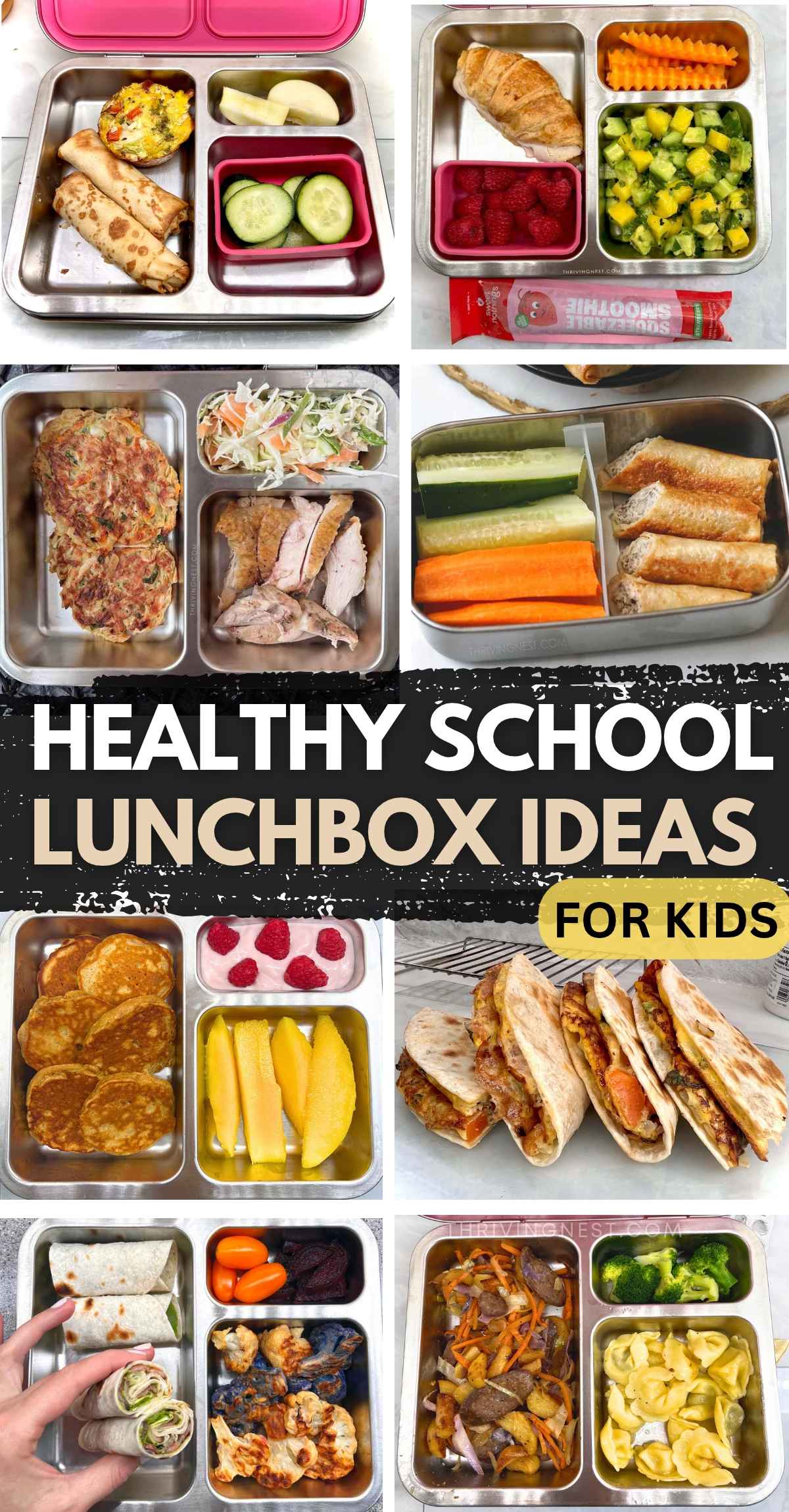
Looking for healthy lunchbox ideas for kids that go beyond sandwiches and packaged snacks? Here are real homemade school lunches I’ve packed for my daughter throughout preschool, kindergarten, and elementary school. You’ll find photographs of substantial meals, easy cold lunches, warm dinner leftovers, and make-ahead foods that help make busy mornings easier.
As a mom and Integrative Nutrition Health Coach, I approach school lunches the same way I approach our meals at home: start with a nourishing, balanced meal containing protein, satisfying carbohydrates, vegetables or fruit, and healthy fats, then add a few snacks or extras.
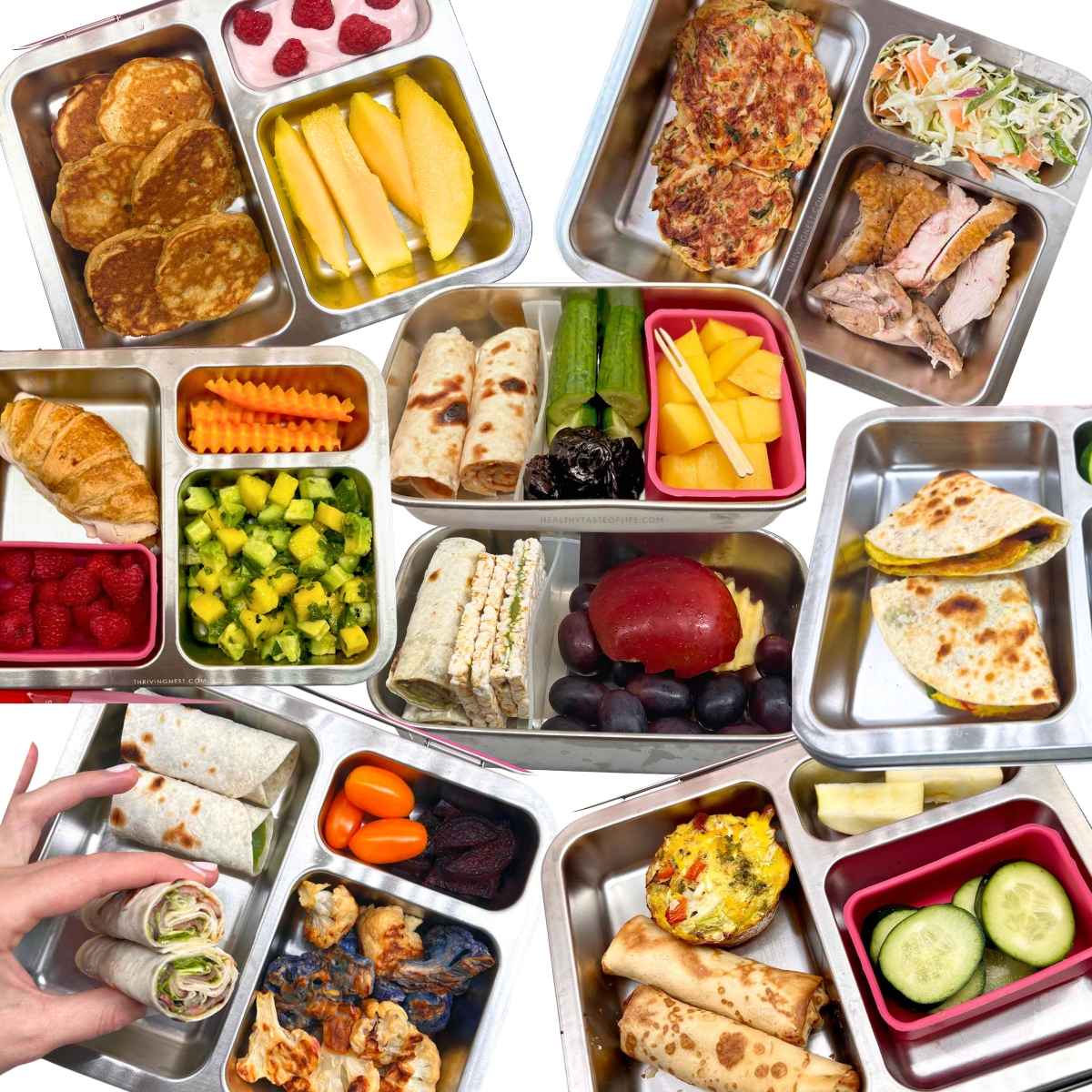
Some lunches are freshly prepared in the morning, others are leftovers from dinner, and many include homemade freezer staples such as meatballs, egg muffins, pancakes, waffles, or savory crepe rolls.
Below, I’ll show you exactly what’s in each lunchbox, how I pack it, and ways to adapt the combinations for gluten-free or dairy-free diets.
How to Build a Healthy Lunchbox for Kids
When I prepare a school lunch, I start with the main meal rather than filling the compartments with random snack foods. A few crackers, fruit pieces, and cheese might look attractive in a bento box, but depending on the portions and ingredients, they may not make a satisfying lunch for a growing child.
I prefer substantial homemade foods – meatballs with pasta, chicken with rice, salmon with potatoes, or an egg-based dish with vegetables and carbohydrates. Smaller items can be added afterward for variety.
This approach is based on the whole-food balanced plate template I developed for Healthy Taste of Life.
My Simple Balanced Lunchbox Formula
I use four main components when building a healthy school lunch.
1. A quality protein source
Protein contributes to growth, tissue development, and the maintenance of muscles and other body tissues. It also helps make a meal more substantial.
My usual choices include:
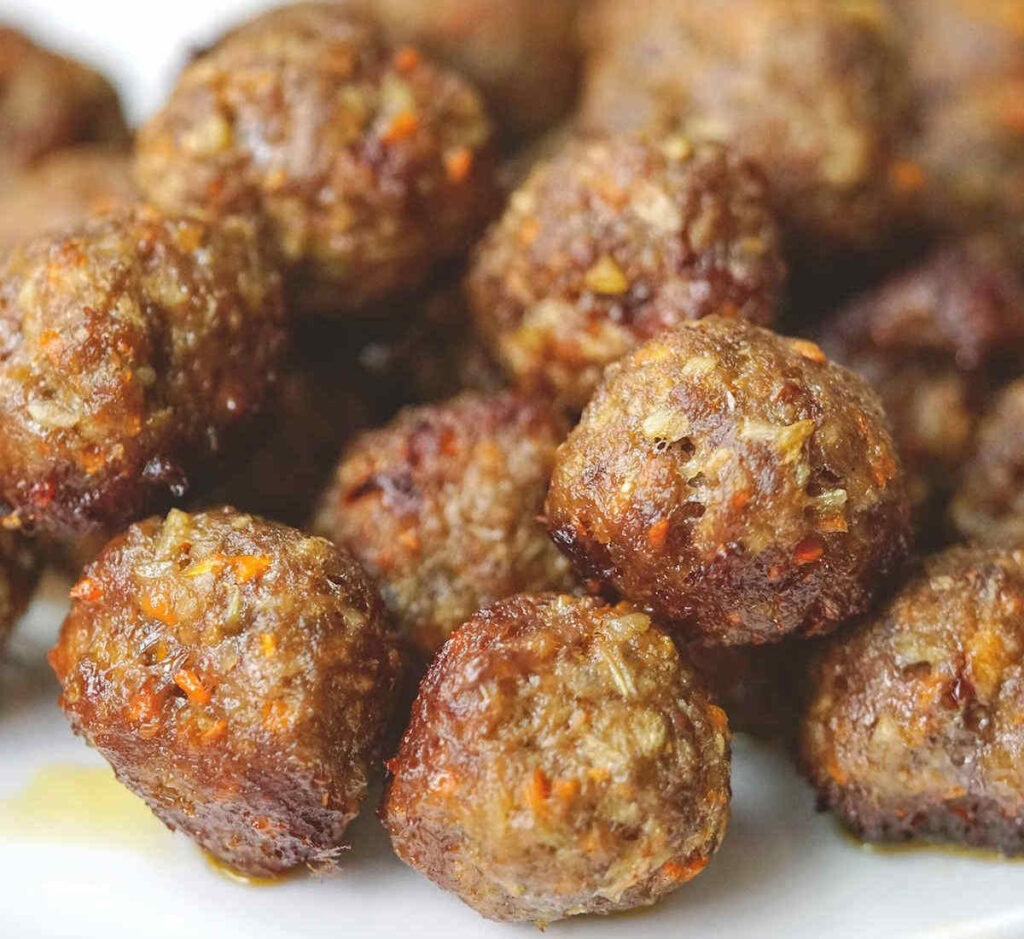
- Homemade chicken, turkey, or beef meatballs
- Baked chicken, chicken cutlets, or leftover roast meat
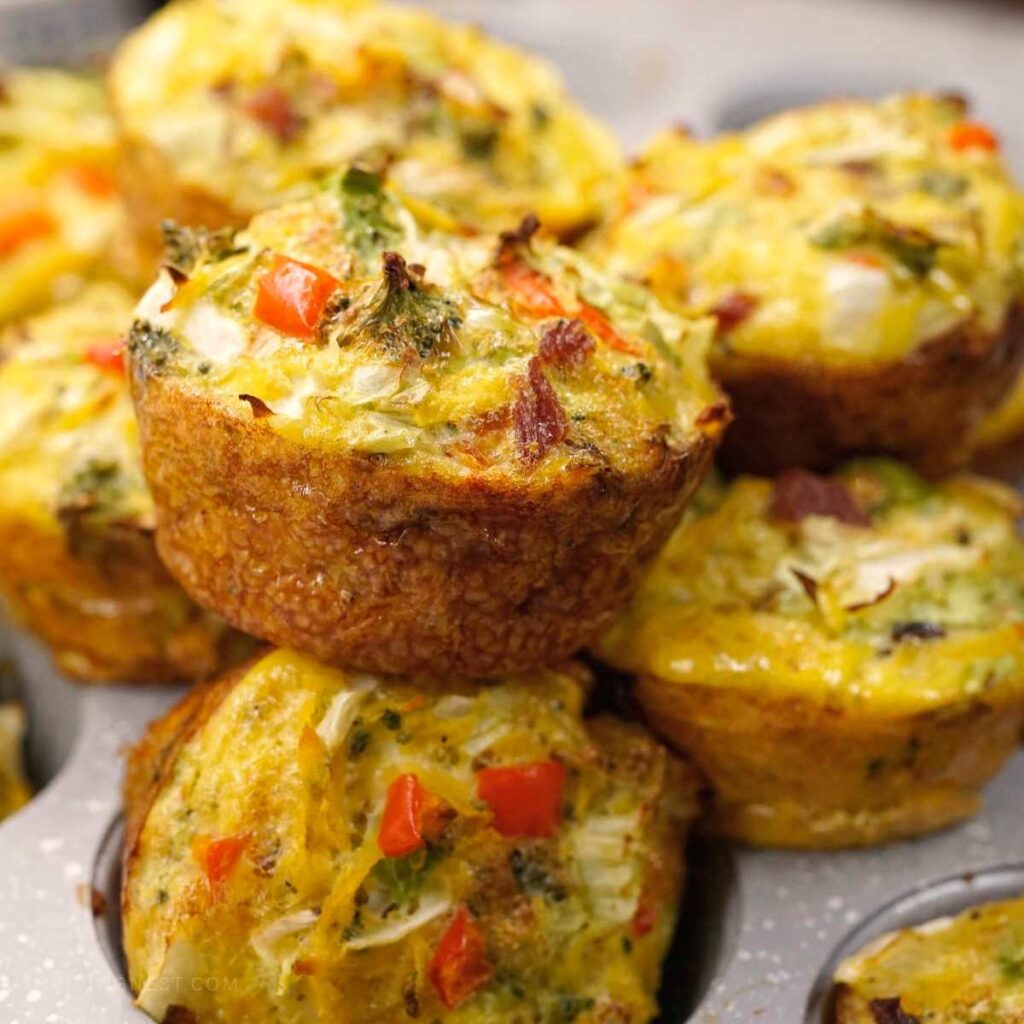
- Eggs, egg muffins, or vegetable frittatas
- Salmon and other cooked fish
- Beans, lentils, hummus, or tofu
- Cheese or yogurt, when tolerated
For example, these soft chicken meatballs made with avocado are convenient for batch cooking and can be paired with pasta, rice, potatoes, or vegetables.
2. Satisfying carbohydrates
Carbohydrates are an important source of energy for active, growing children. I frequently use rice, buckwheat, quinoa, potatoes, sweet potatoes, pasta, tortillas, muffins, pancakes, and other grain-based foods.
I prefer a variety of whole grains and minimally processed starchy foods when possible, while making sure the meal provides enough energy for my child’s appetite and activity level.
3. Vegetables and fruit
Vegetables and fruit provide fiber, vitamins, minerals, and a variety of beneficial plant compounds. Some of my favorites for lunchboxes include cucumbers, carrots, broccoli, cauliflower, tomatoes, bell peppers, cabbage, asparagus, berries, apples, mango, and peaches.
They don’t always need to be packed separately. Vegetables can also be incorporated into meatballs, soups, fritters, egg muffins, and other homemade dishes.
4. Healthy fats, flavor, and extras
Avocado, olive oil, salmon, nuts, seeds, and their butters provide fats that are important in a child’s diet. I also add extras such as homemade snack bars, yogurt, crackers, fresh fruit, or a small sweet treat when appropriate.
These foods can be part of a healthy lunch. The key is that they complement the meal rather than automatically replacing it.
Do Kids Need to Follow Exact Healthy Plate Proportions?
My original whole-food plate uses a visual starting point of approximately half vegetables and fruit, one-quarter protein, and one-quarter starchy carbohydrates, with fats and other additions.
For children, I use this as a flexible reminder of food-group variety, not a strict portion rule.
Appetites vary with age, growth, activity, and individual needs. Some children need more carbohydrates, while others prefer larger portions of certain foods.
A lunchbox also doesn’t have to contain every nutrient in perfectly measured amounts. The goal is to provide a variety of nourishing foods and enough energy throughout the day.
My simple rule: Build the main meal first, then add the smaller snacks and extras.
Real Healthy School Lunchbox Ideas (With Photos)
Here are some of the homemade school lunches I’ve packed for my daughter, using the same food-group balance we follow with our family meals. You’ll find easy cold lunchbox ideas, comforting dinner leftovers, breakfast-style lunches, and hot meals for a thermos.
Most include a protein source, satisfying carbohydrates, and vegetables or fruit, with a few extras for variety. Some are made fresh, while others come together quickly using foods I’ve already prepared.
Packing note: When I describe a lunch as cold, I mean packed properly chilled in an insulated lunch bag with frozen cold packs. For hot lunches, I use a preheated insulated food jar that keeps the food safely hot until lunchtime. Cooked foods containing meat, fish, eggs, or rice shouldn’t be left lukewarm for several hours.
Easy Cold Lunchbox Ideas for Kids
These lunches are easy to assemble without reheating in the morning. Some use sandwiches or tortillas, while others combine leftover proteins with fresh vegetables and fruit.
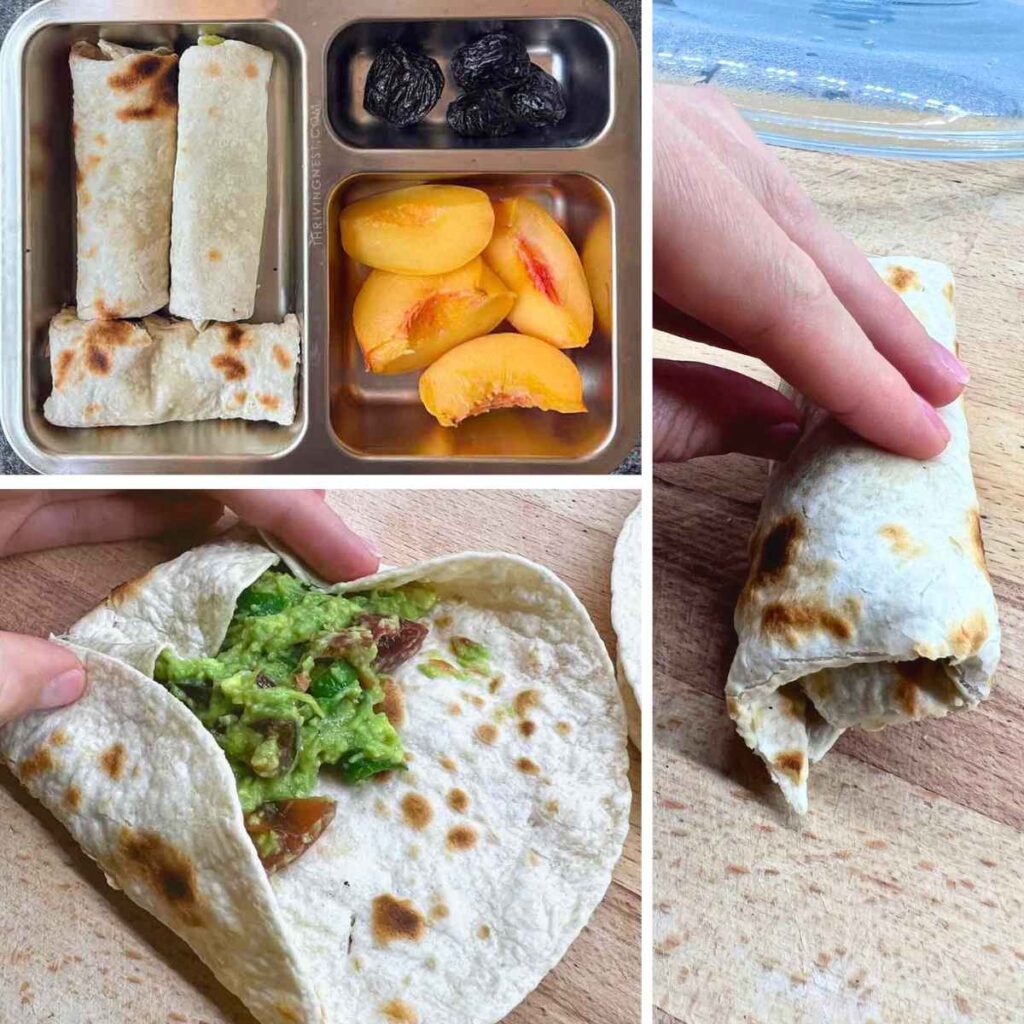
Chicken and Guacamole Tortilla Roll-Ups with Fruit
What’s inside: Tortillas filled with guacamole and leftover cooked chicken, rolled, with fresh peach slices and dried plums.
How to pack: Use chilled chicken, assemble the tortillas in the morning, and roll tightly to keep the filling in place. Pack with cold packs.
GF/DF swaps: Choose gluten-free tortillas if needed. The filling is naturally dairy-free when prepared without dairy-based additions.
Turkey English Muffin Sandwich with Fresh Vegetables
What’s inside: Whole-grain English muffin with turkey pastrami, lettuce, pumpkin seed butter, and tomato slices, with crinkle-cut cucumbers, bell peppers, and grape tomatoes.
How to pack: Assemble the sandwich in the morning or prepare the ingredients the night before. Keep juicy tomato slices separate if you want the bread to stay firm.
GF/DF swaps: Use gluten-free bread or an English muffin and check the ingredients in the turkey and spread.

Turkey Croissant Sandwich with Mango-Avocado Salad
What’s inside: Croissant sandwich with turkey breast, a mango-cucumber-avocado salad, raspberries, carrot sticks, and a squeezable smoothie pop.
How to pack: Prepare the salad ingredients the evening before but combine them in the morning to keep the avocado fresh. Pack the sandwich, salad, and smoothie chilled.
GF/DF swaps: Use gluten-free bread or a tortilla in place of the croissant. For dairy-free lunches, choose a suitable dairy-free bread and smoothie.

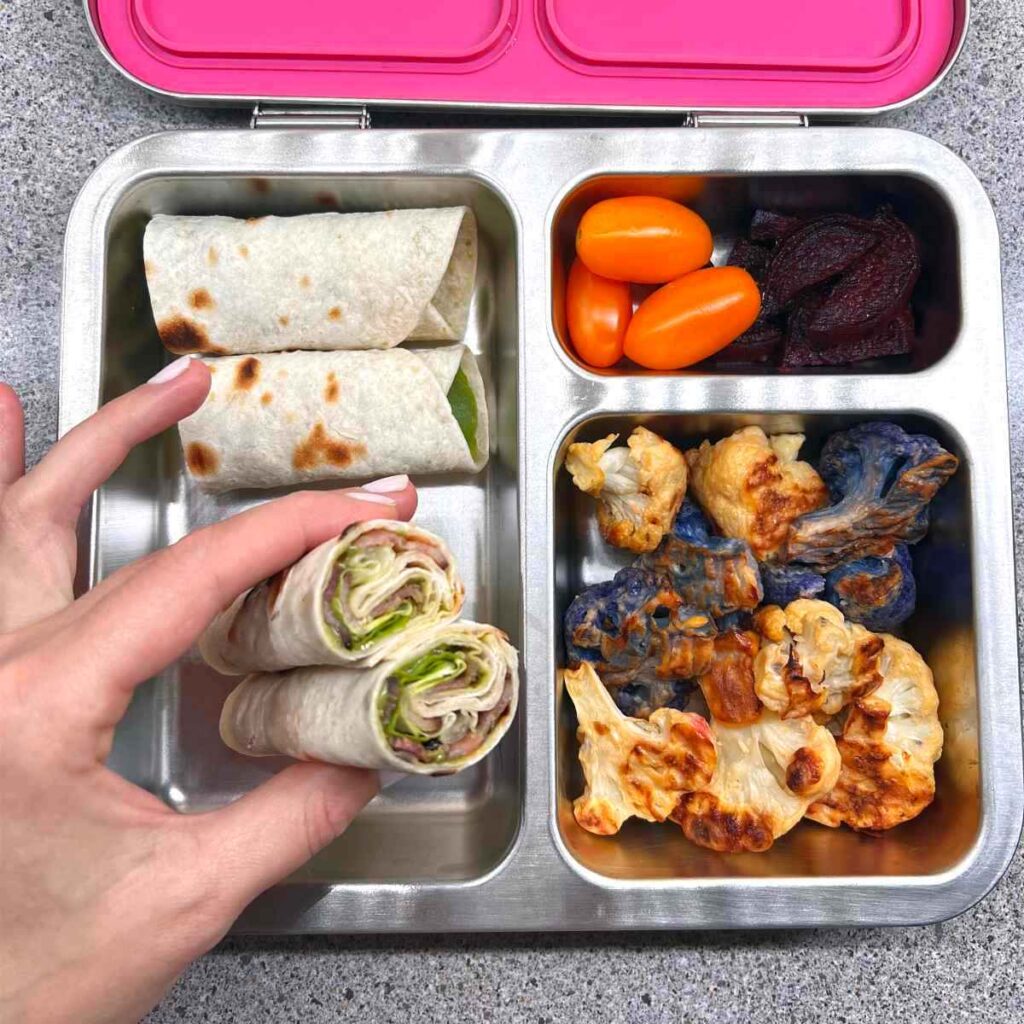
Ground Beef and Vegetable Tortilla Wraps
What’s inside: Mini tortilla wraps filled with leftover ground beef, chopped vegetables, spices, and fresh lettuce. Served with roasted cauliflower and beets from dinner, plus cherry tomatoes.
How to pack: Cool and refrigerate the cooked filling and roasted vegetables at dinner time. Assemble the wraps with chilled ingredients in the morning to prevent the tortillas from becoming soggy.
GF/DF swaps: Use gluten-free tortillas and check that the ground beef seasoning contains no gluten or dairy ingredients.
This is an easy way to turn a ground-meat dinner into another complete meal without extra cooking.
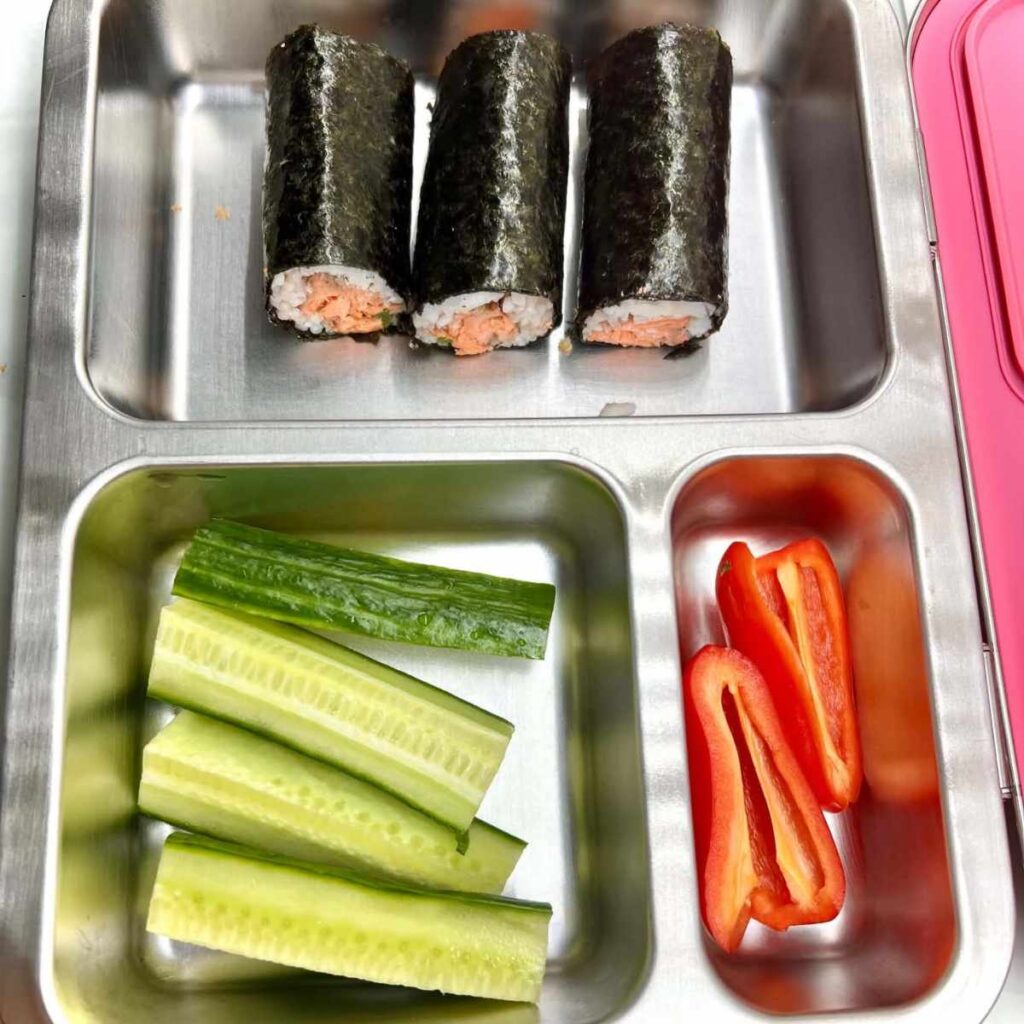
Salmon Nori Wraps with Rice and Avocado
What’s inside: Cooked salmon flakes, rice, and avocado wrapped in nori seaweed sheets, with fresh vegetables on the side.
How to pack: Refrigerate the cooked salmon and rice shortly after cooking. Assemble the wraps with chilled ingredients shortly before packing, or keep the nori separate if your child prefers it crisp.
GF/DF swaps: This meal can be naturally gluten-free and dairy-free. Check any added sauces or seasonings, particularly soy sauce.
These homemade salmon wraps are a convenient alternative to a regular sandwich and combine protein, carbohydrates, and healthy fats.
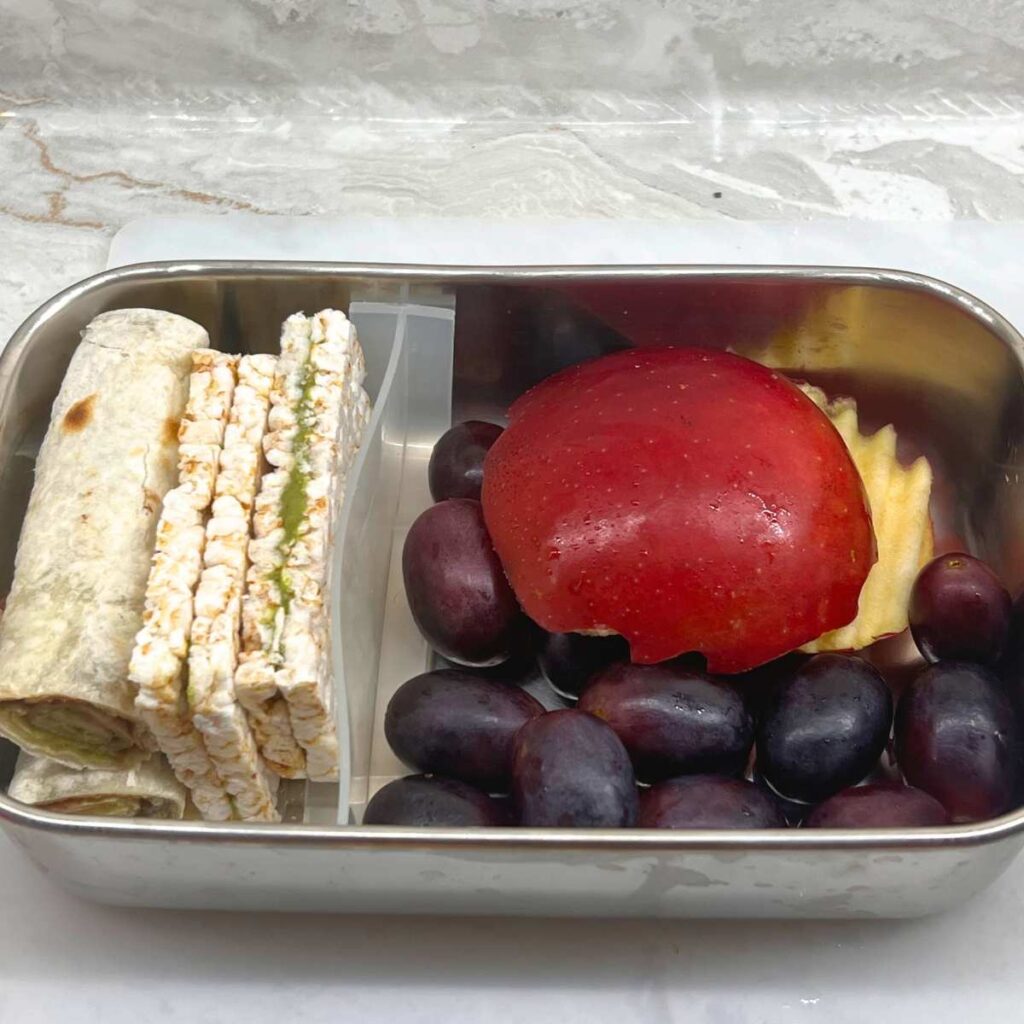
Banana and Nut Butter Roll-Ups with Fruit
What’s inside: Tortilla roll-ups filled with banana and nut butter, mini rice cakes with pumpkin seed butter, fresh apple slices, and grapes.
How to pack: Roll the tortillas tightly and cut into portions. Pack the prepared fruit chilled and keep the rice cakes separate if you want them to stay crunchy. For younger children, cut grapes lengthwise into quarters.
GF/DF swaps: Choose gluten-free tortillas and rice cakes. Use seed butter instead of nut butter if required by school allergy policies.
Balance it: This is one of my lighter lunches for half-day school. For a full school day, I’d add an egg muffin, yogurt, or another suitable protein-rich food.
Breakfast-Style and Make-Ahead Lunchbox Ideas
Breakfast foods can make convenient school lunches, particularly when they’re homemade and paired with protein, fruit, or vegetables.
I often keep pancakes, crepes, and egg muffins in the freezer, which makes assembling these lunches much faster.
Crepe Roll-Ups, Egg Muffin and Mango
What’s inside: Crepe roll-ups with pumpkin seed butter, fresh mango cubes, a freezer friendly veggie egg muffin, and coconut yogurt.
How to pack: Prepare the crepes and egg muffins ahead, then refrigerate or freeze. Thaw safely in the refrigerator and pack chilled with the yogurt in a leakproof container.
GF/DF swaps: Try my gluten-free dairy-free crepes and use coconut yogurt instead of dairy yogurt.
The egg muffin adds a protein-rich component, while the crepes and fruit supply carbohydrates and variety.

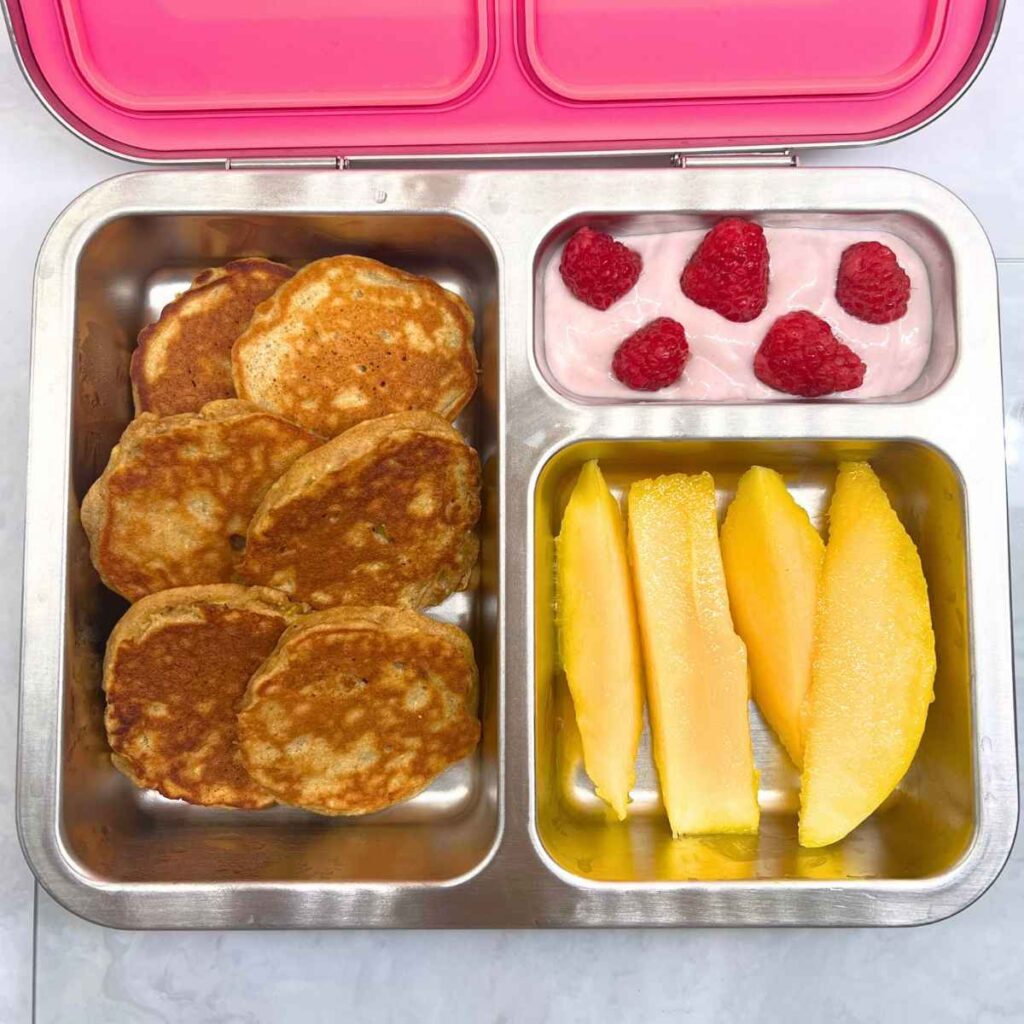
Homemade Pancakes with Fresh Fruit and Yogurt
What’s inside: Homemade pancakes with fresh sliced mango, berries, and yogurt. I rotate between my applesauce pancakes, sweet potato pancakes, banana pancakes or pumpkin pancakes depending on the season.
How to pack: I usually freeze pancakes in portions and thaw them overnight in the refrigerator. In the morning, I just cut the fruit and pack everything chilled.
GF/DF swaps: Use a gluten-free pancake recipe and dairy-free yogurt when needed.
Balance it: If the yogurt is low in protein or the lunch needs to be more filling, add a boiled egg or another protein source.
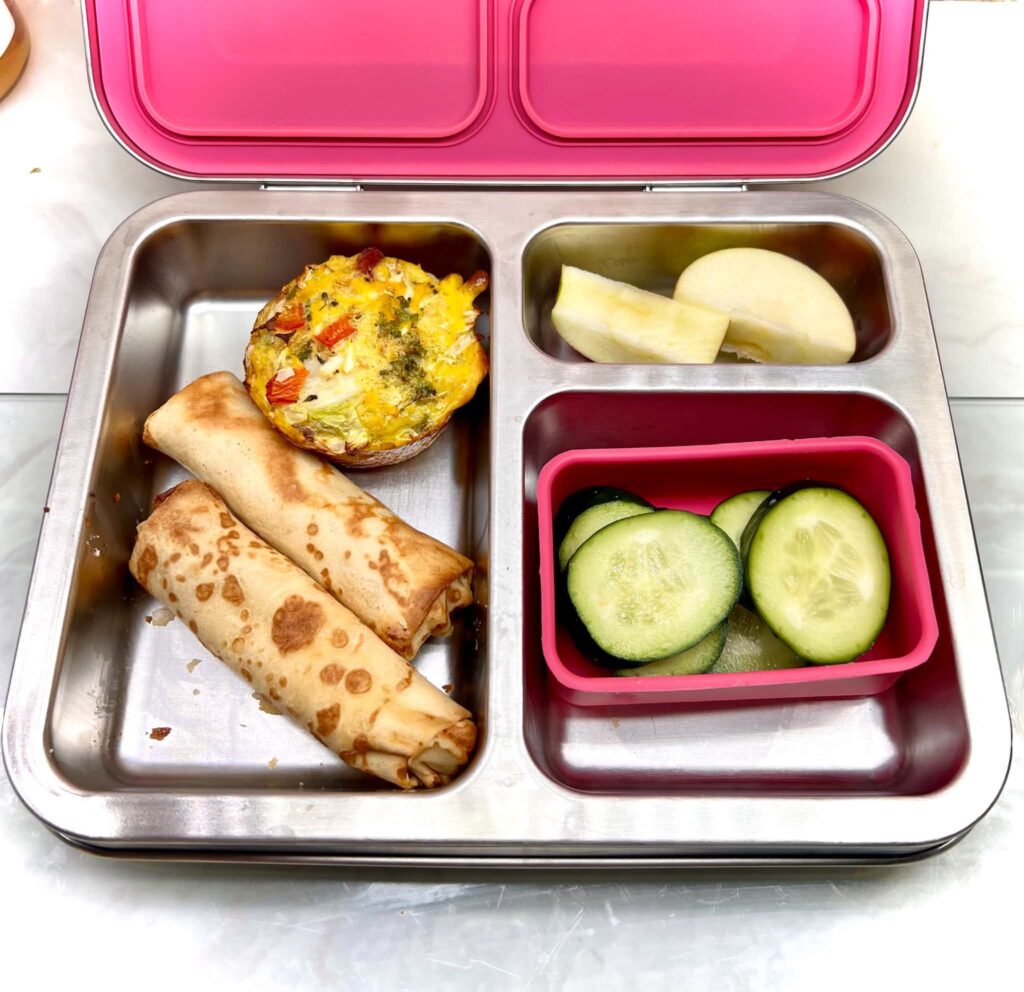
Chicken Crepe Rolls, Egg Muffin and Fresh Fruit
What’s inside: Pre-made chicken and mushroom crepe rolls, a vegetable egg muffin, fresh cucumber, and apple slices.
How to pack: I prepare the crepe rolls and egg muffins in batches and freeze them. Thaw overnight in the refrigerator and pack them chilled in the morning.
GF/DF swaps: Make the crepes with gluten-free flour and use dairy-free milk or other suitable substitutions where needed.
This lunch works well when I don’t have time to cook in the morning because the main components are already prepared.
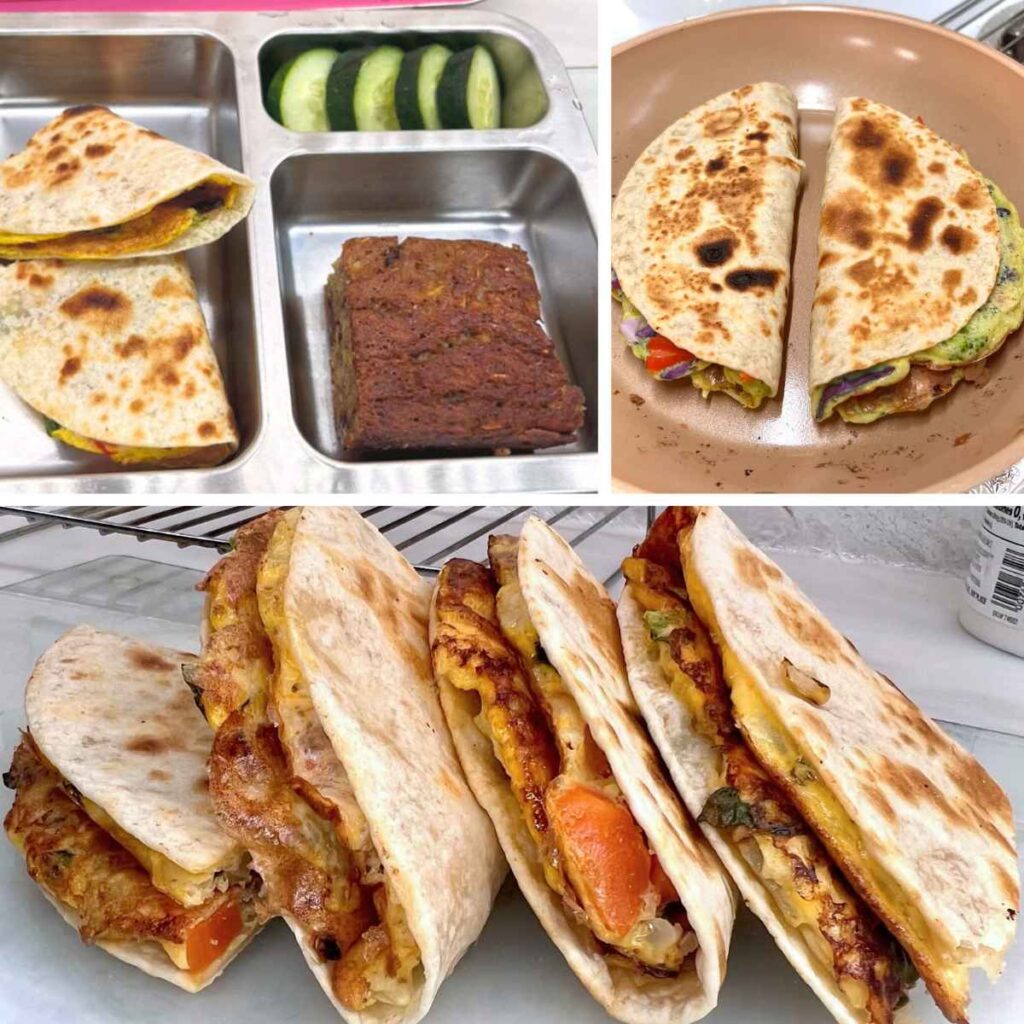
Omelette-Quesadilla with Banana Sheet-Pan Pancake
What’s inside: A veggie omelette cooked with a tortilla on top, then folded and cut into triangles. Served with a square of homemade banana sheet pan pancake and fresh sliced vegetables.
How to pack: Let it cool safely, and refrigerate before packing chilled. I keep portions of my banana sheet pan pancakes frozen, so I can thaw one overnight for lunch.
GF/DF swaps: Use a gluten-free tortilla and a gluten-free flour option for the pancake. Choose dairy-free yogurt in the pancake recipe if needed.
I added finely chopped vegetables directly to the omelette for extra variety.
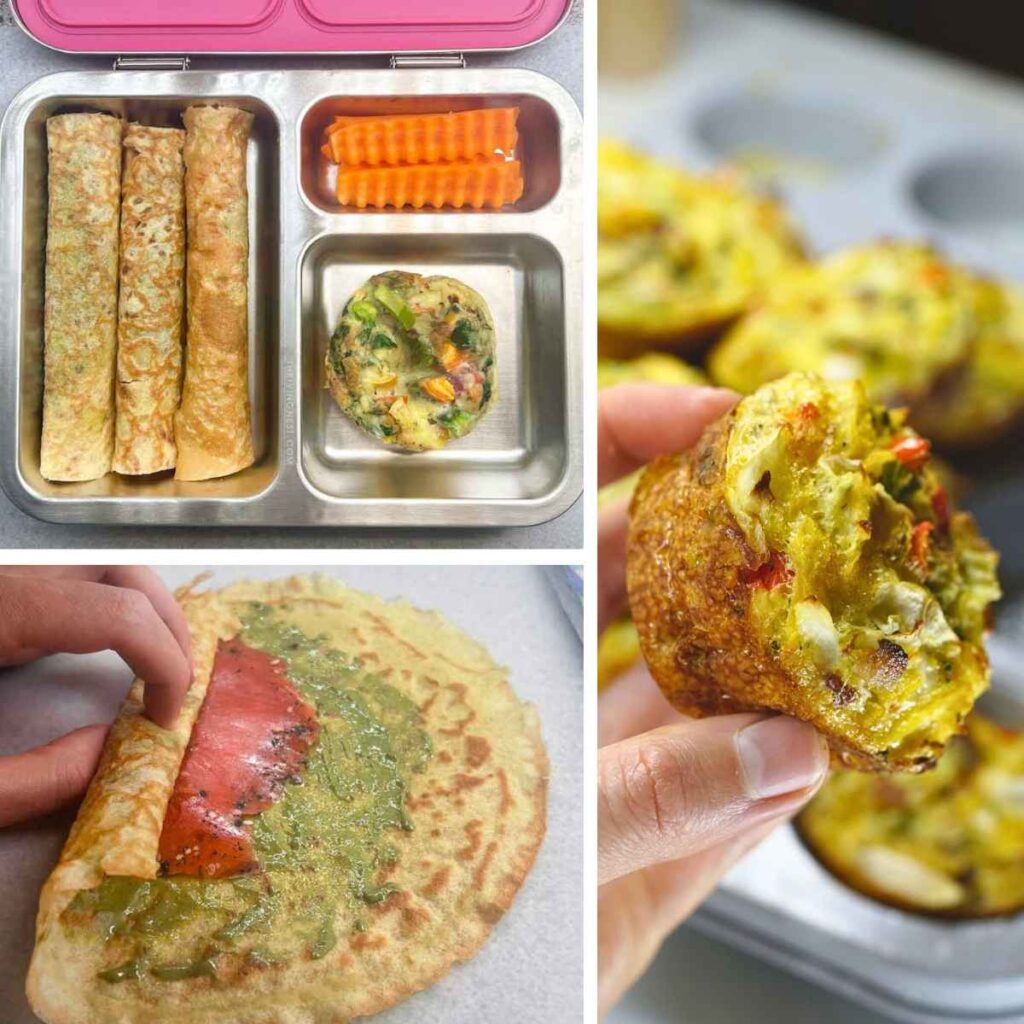
Smoked Salmon Crepe Rolls and Vegetable Egg Muffin
What’s inside: Crepe roll-ups with pumpkin seed butter (and smoked salmon), a homemade vegetable egg muffin, and crinkle-cut carrot sticks.
How to pack: Prepare the crepes and veggie egg muffins ahead. Assemble the smoked salmon rolls with chilled ingredients and pack with adequate cold packs.
GF/DF swaps: Use gluten-free dairy-free crepes and a suitable dairy-free egg muffin recipe if needed.
This breakfast-style lunch provides protein from the salmon and eggs, carbohydrates from the crepes, and vegetables on the side.
Homemade School Lunches with Dinner Leftovers
This is probably the most practical part of my lunchbox routine. When making dinner, I often cook a little extra chicken, meatballs, pasta, rice, buckwheat, or roasted vegetables.
The next morning, I only need to add fresh fruit or vegetables and choose whether to pack the main dish chilled or safely hot.
Mashed Potatoes, Egg-Cauliflower and Salad
What’s inside: Creamy mashed potatoes, cauliflower florets coated in egg wash and pan-fried, plus a small salad of lettuce and cherry tomatoes.
How to pack: Refrigerate the cooked components shortly. Pack the potatoes and cauliflower chilled, or thoroughly heated in a suitable insulated food jar, with the fresh salad separately chilled.
GF/DF swaps: Prepare mashed potatoes with olive oil and dairy-free milk or unsalted broth. The egg-coated cauliflower can be gluten-free when no wheat-based coating is used.
Balance it: The egg coating contributes some protein, but you can add chicken, hummus, or another protein-rich side for a more substantial lunch.

Homemade Beef Meatballs with Pasta and Fresh Vegetables
What’s inside: Homemade soft beef meatballs, fusilli pasta with tomato sauce, cherry tomatoes, and sliced cucumbers.
How to pack: Refrigerate dinner leftovers. Pack the pasta and meatballs fully chilled, or reheat thoroughly and transfer them to a preheated insulated food jar. Keep the fresh vegetables separately chilled.
GF/DF swaps: Use gluten-free pasta and check the sauce ingredients. My beef meatballs are made without breadcrumbs or cheese.
Why it works: Meatballs provide protein, pasta supplies carbohydrates, and the vegetables add fiber and freshness.

Broccoli Spaghetti, Blueberries and Cucumbers
What’s inside: Spaghetti tossed with steamed broccoli, a little butter or ghee, and salt, with fresh blueberries and sliced cucumbers on the side.
How to pack: I often cook the broccoli in the same pot as the pasta toward the end of cooking. Cool and refrigerate, then pack chilled, or keep the hot main in an insulated food jar.
GF/DF swaps: Use gluten-free pasta and olive oil instead of butter or ghee.
Balance it: Add shredded chicken, beans, tofu, or an egg muffin for a more protein-rich lunch.

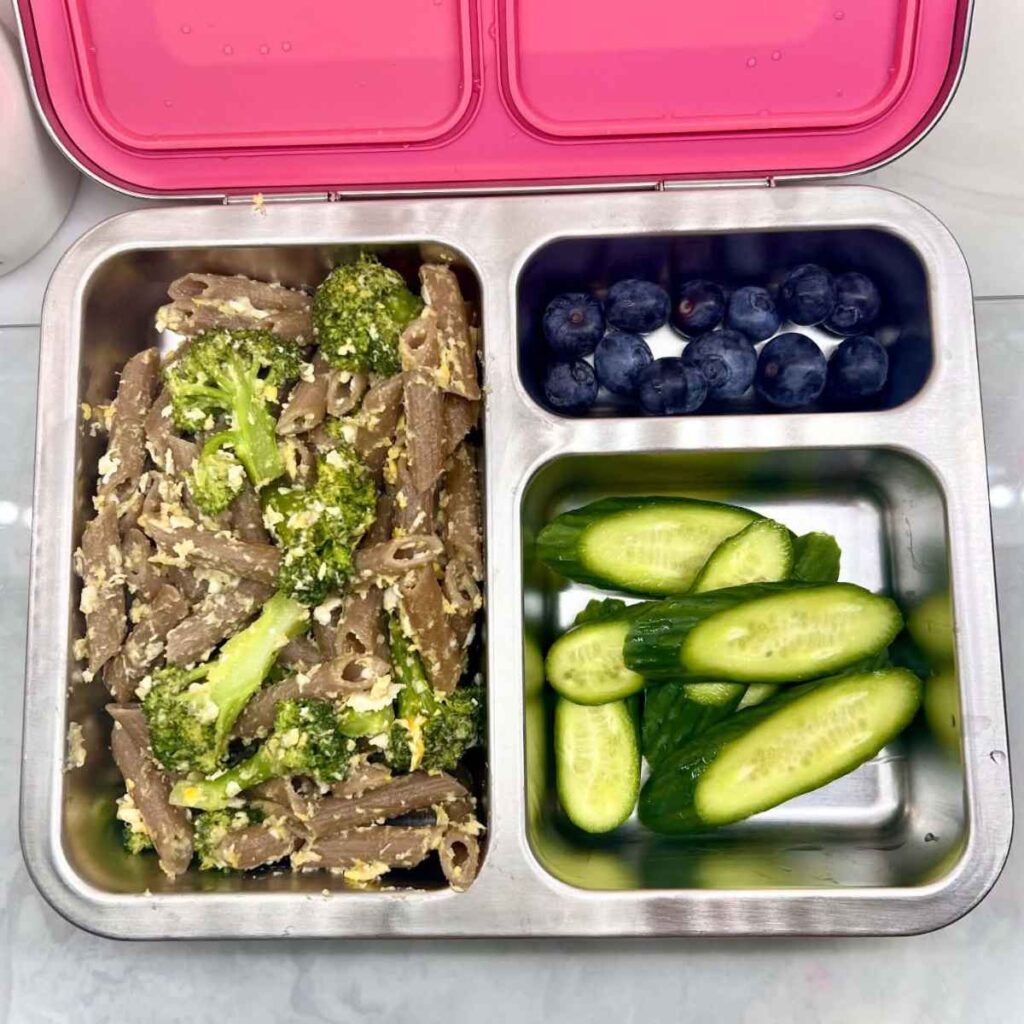
Egg-Scramble Pasta with Broccoli
What’s inside: Gluten-free teff penne pasta mixed with scrambled egg and steamed broccoli, with fresh cucumbers and blueberries on the side.
How to prepare: While the cooked pasta is still in the pan, add a beaten egg and stir over the heat until the egg is completely cooked and forms small pieces throughout the pasta.
How to pack: Cool and refrigerate the cooked pasta. Pack chilled with cold packs, keeping the fresh fruit and vegetables separate.
GF/DF swaps: Use certified gluten-free pasta and olive oil instead of butter. This combination can be dairy-free.
The egg turns a simple pasta dish into a more substantial meal without requiring a separate protein main.
Lazy Cabbage Rolls, Carrots and Blueberries
What’s inside: Leftover lazy cabbage roll casserole made with ground meat, cabbage, and rice, plus fresh blueberries and crinkle-cut carrots.
How to pack: Refrigerate the casserole shortly after dinner. Pack it chilled with cold packs, or reheat thoroughly and transfer immediately to a suitable insulated food jar that will keep it safely hot.
GF/DF swaps: The linked casserole can be prepared without gluten or dairy ingredients.
This is one of my favorite ways to use dinner leftovers because the main dish already combines protein, vegetables, and carbohydrates.

Chicken Cutlets, Buckwheat and Vegetables
What’s inside: Homemade mini chicken cutlets, cooked roasted buckwheat groats, steamed asparagus, and fresh cucumber slices.
How to pack: Make extra chicken cutlets and buckwheat at dinner. Pack chilled with cold packs, or place the thoroughly reheated chicken and buckwheat in an insulated food jar, with the fresh vegetables separately chilled.
GF/DF swaps: Use gluten-free flour in the cutlet coating and check the other ingredients. Buckwheat itself is naturally gluten-free.

Chicken Thighs with Potato Fritters and Coleslaw
What’s inside: Baked chicken thigh slices, grated potato fritters with carrots, and homemade coleslaw.
How to pack: Refrigerate the dinner leftovers. Pack the chicken and fritters chilled with cold packs, and keep the coleslaw in a separate compartment.
GF/DF swaps: Make the potato fritters with gluten-free flour and use a dairy-free dressing for the coleslaw if necessary.
A combination like this shows how a proper family dinner can easily become a satisfying school lunch.

Salmon with Roasted Potatoes and Asparagus
What’s inside: Leftover baked salmon, roasted potatoes, asparagus, and mini rice cakes spread with pumpkin seed butter.
How to pack: Refrigerate the salmon and vegetables after dinner, then pack them chilled the following morning. Keep the rice cakes separate to preserve their crunch.
GF/DF swaps: This lunch can be naturally gluten-free and dairy-free, depending on the seasonings and rice cake ingredients.
Salmon provides protein and omega-3 fats, potatoes contribute carbohydrates, and asparagus adds fiber and vegetables.

Slow Cooker Beef Bourguignon with Rice
What’s inside: Slow-cooked beef bourguignon served with jasmine rice, homemade fermented cucumbers , and two mini banana-carrot muffins.
How to pack: Refrigerate the cooked beef and rice right after dinner. In the morning, either pack them thoroughly chilled or reheat them and transfer to a preheated insulated food jar. Keep the pickles and muffins separate.
GF/DF swaps: Use a gluten-free thickener in the stew if needed, and a dairy-free variation of the muffins.
The stew provides a hearty protein-rich main, rice supplies carbohydrates, fermented cucumber is a good supply of probiotics and the muffins makes a nice sweet treat addition.

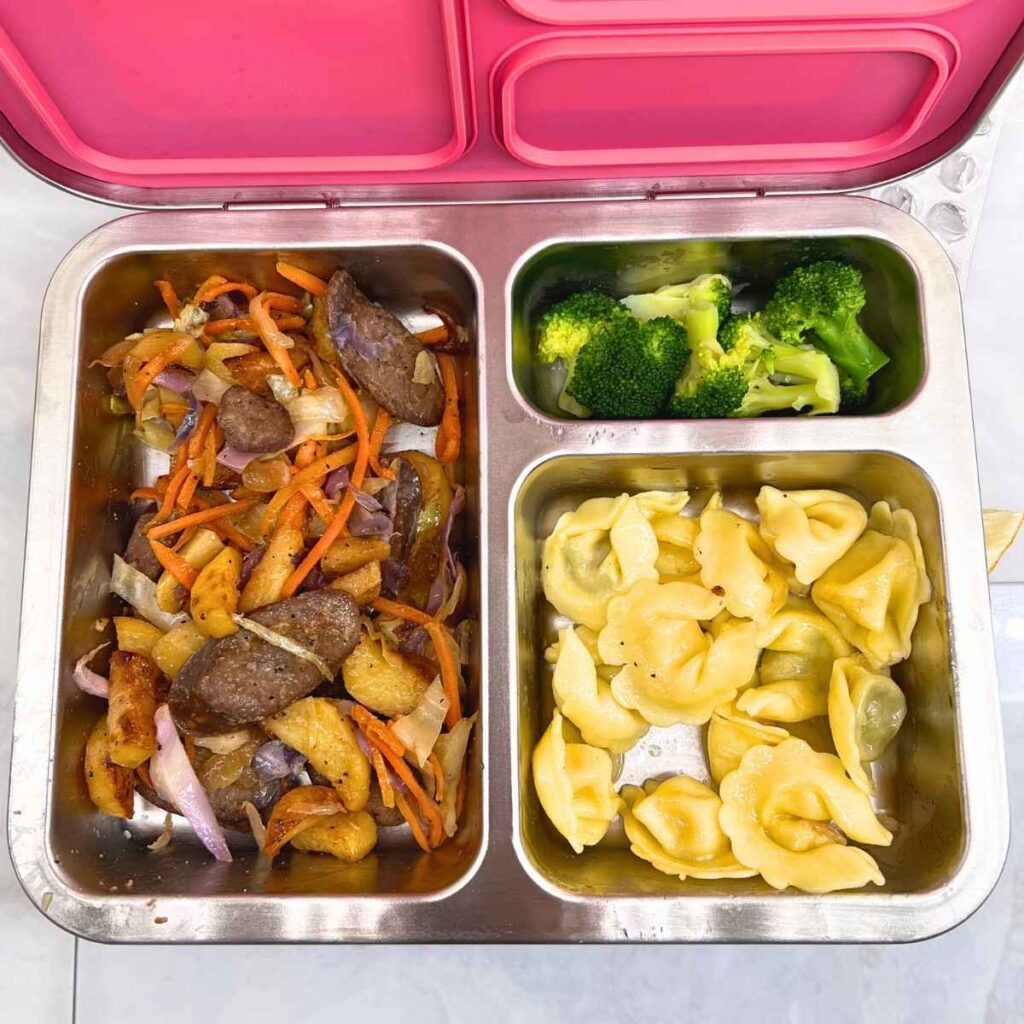
Roasted Vegetables with Sausage and Cheese Tortellini
What’s inside: Leftover roasted vegetables and sausage, cheese-filled tortellini, and steamed broccoli.
How to pack: Refrigerate the cooked food promptly and pack chilled, or transfer the reheated main meal to a suitable hot food jar.
GF/DF swaps: Use gluten-free tortellini or substitute gluten-free pasta. For a dairy-free option, choose pasta without cheese and check the sausage ingredients.
This is a practical way to combine a protein source, pasta, and vegetables using foods already prepared for dinner.
Buckwheat with Egg-Coated Broccoli and Fermented Pickles
What’s inside: Roasted buckwheat groats, broccoli florets dipped in egg and shallow-fried, and homemade fermented dill pickles.
How to pack: Cook the broccoli and buckwheat ahead, refrigerate and pack chilled. Keep the pickles in a separate compartment.
GF/DF swaps: Buckwheat is naturally gluten-free, and the meal can be dairy-free when cooked without butter or cheese.
Balance it: Depending on the amount of egg used, add chicken, meatballs, or another protein-rich side if your child needs a larger lunch.

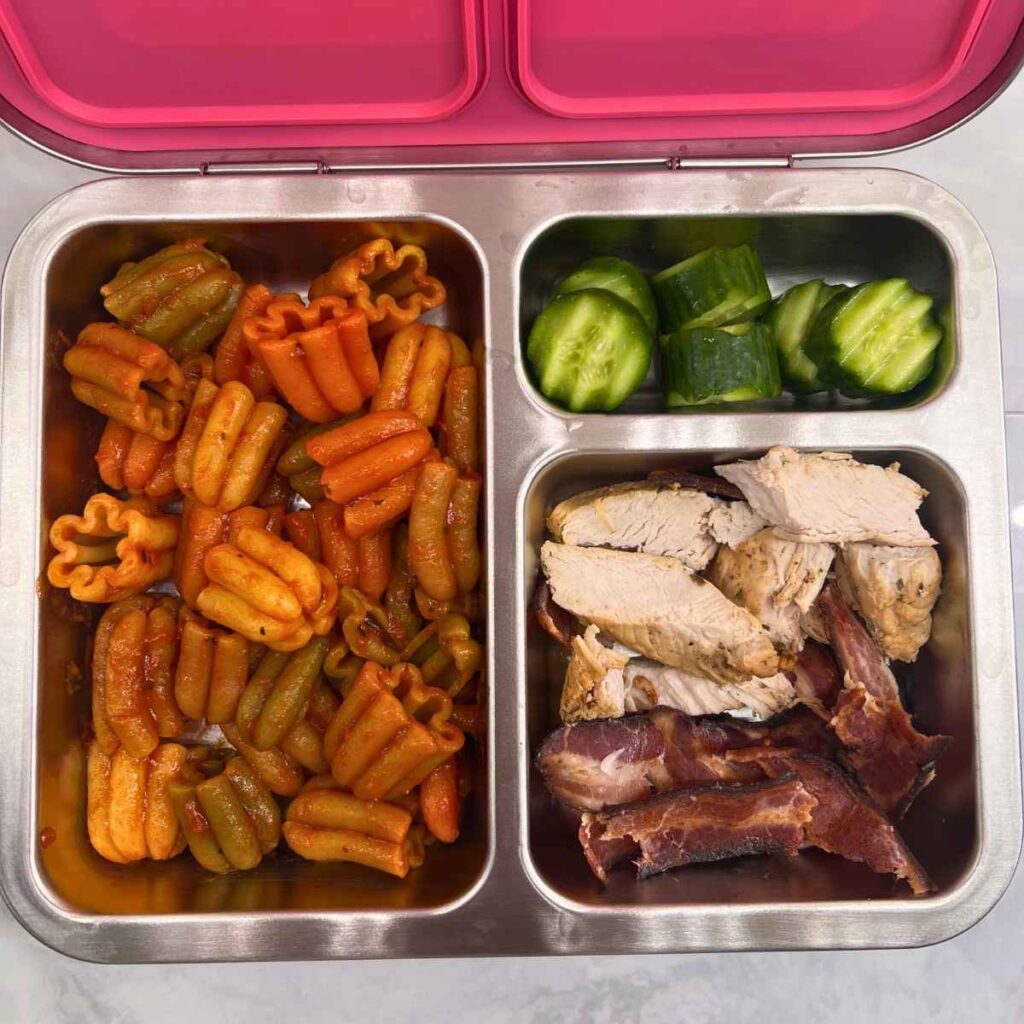
Marinara Pasta with Roasted Chicken and Bacon
What’s inside: Leftover pumpkin-shaped pasta with marinara sauce, roasted chicken, bacon, and sliced cucumber.
How to pack: Refrigerate the pasta and meat after dinner. Pack chilled with cold packs, keeping cucumber separate, or use an insulated food jar for a safely hot main.
GF/DF swaps: Use gluten-free pasta and check the marinara sauce and bacon ingredients for any dietary restrictions.
The chicken contributes substantial protein, while pasta provides carbohydrates and the cucumber adds a fresh vegetable side.
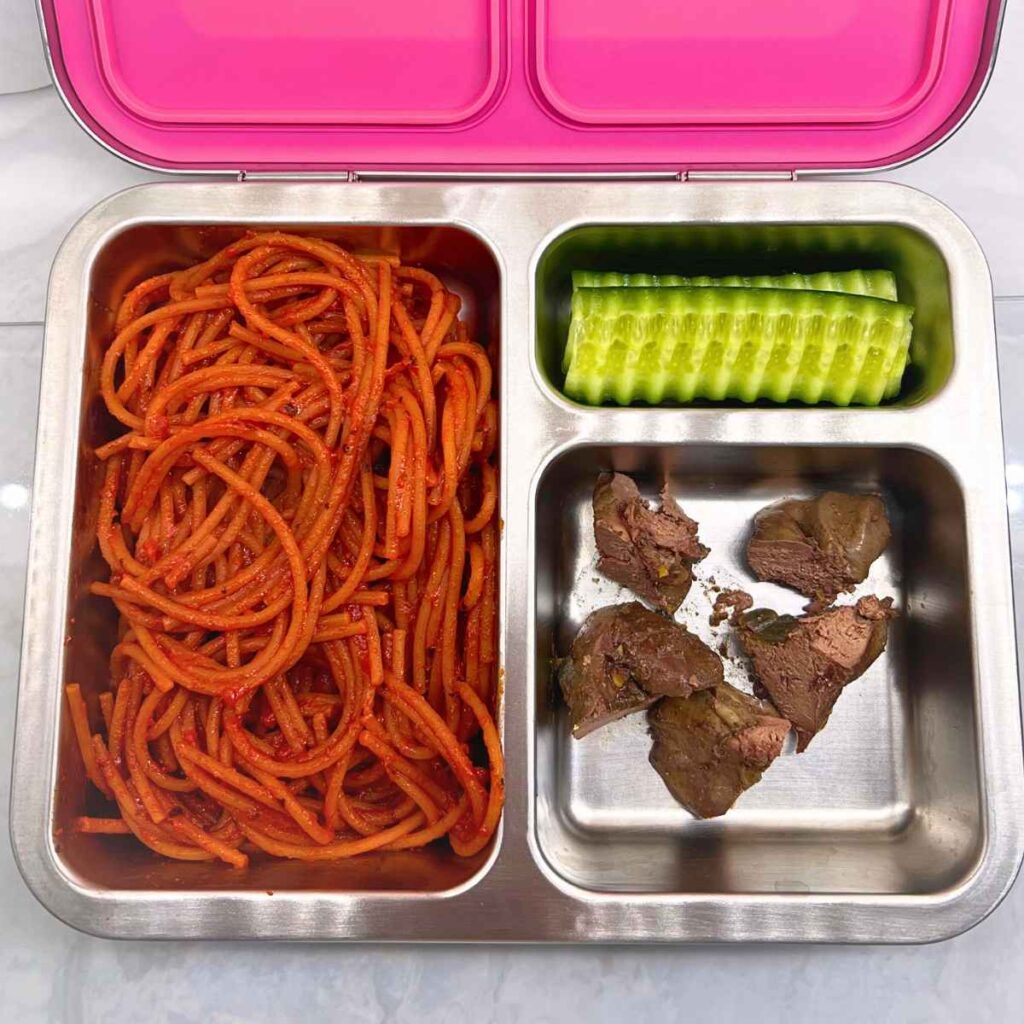
Lentil Spaghetti, Chicken Liver and Cucumber
What’s inside: Lentil spaghetti with tomato sauce, roasted chicken liver, and fresh cucumber slices. Alternatively you can make chicken liver muffins, if your child doesn’t like the taste of plain liver.
How to pack: Cook the liver thoroughly, refrigerate and pack the meal chilled or safely hot in an insulated container. Keep the cucumber separately chilled.
GF/DF swaps: Lentil pasta is generally gluten-free when made without wheat ingredients; check the label. Use a dairy-free tomato sauce if required.
Chicken liver provides iron and vitamin B12 but is also very high in preformed vitamin A, so I serve it in modest portions rather than making it an everyday lunchbox protein.
Baked Salmon with Cauliflower and Asparagus
What’s inside: Leftover baked salmon, cooked cauliflower, asparagus, fresh cherry tomatoes, and a tortilla roll-ups spread with seed butter.
How to pack: Chill the salmon and vegetables after dinner. Pack the prepared lunch cold, with the tortilla in a separate compartment if preferred.
GF/DF swaps: Use a gluten-free tortilla and a dairy-free seed butter spread.
This meal combines a protein-rich main, vegetables, and a starchy tortilla with additional fats from the spread.

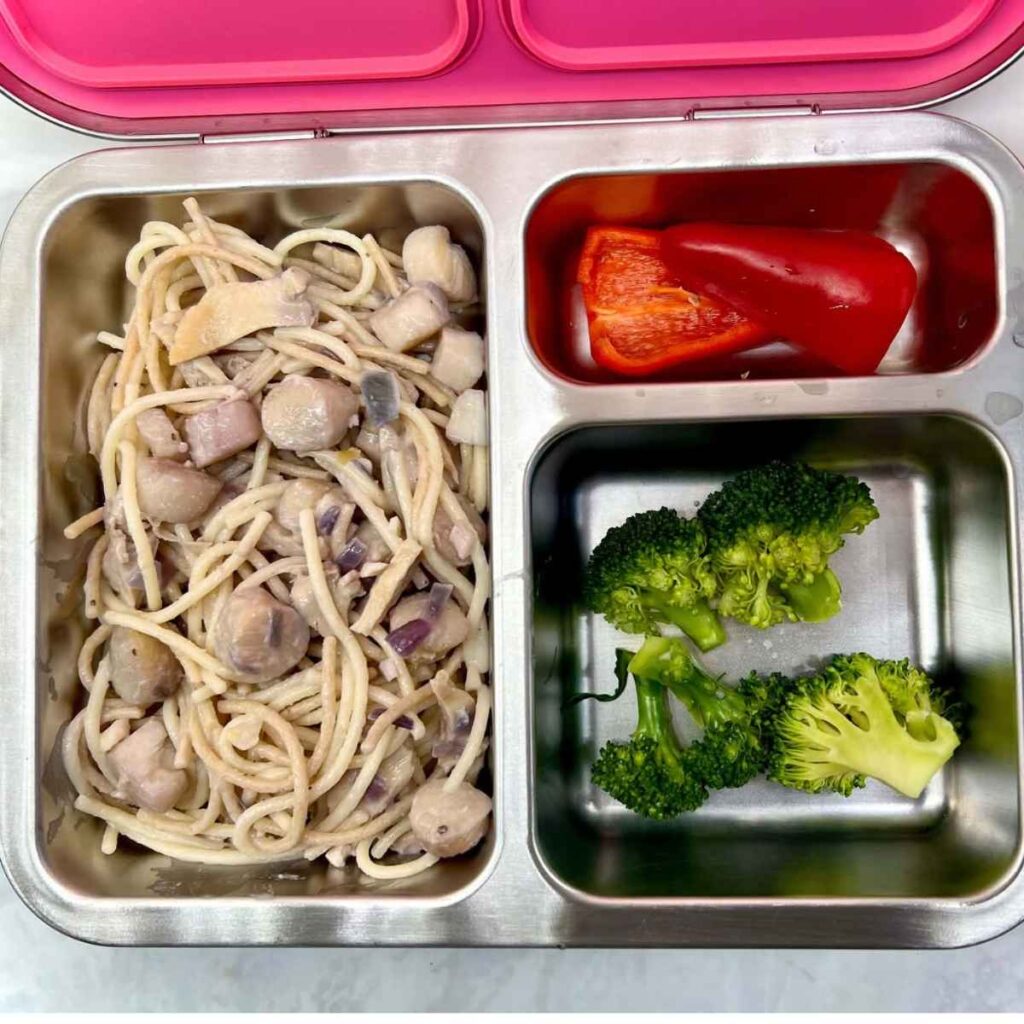
Creamy Scallop Pasta And Veggies
What’s inside: Wild-caught Patagonian scallops pan-seared in butter, finished with vinegar, lemon juice, garlic, onion, and cashew-based cream, served with pasta and vegetables.
How to pack: Cool and refrigerate the cooked seafood and pasta. Pack chilled with sufficient cold packs. Keep the vegetables separate if desired.
GF/DF swaps: Use gluten-free pasta and olive oil instead of butter for a dairy-free version. Cashew cream is dairy-free, but check school policies concerning nuts.
The scallops provide protein, pasta supplies carbohydrates, and the vegetables complete the meal.
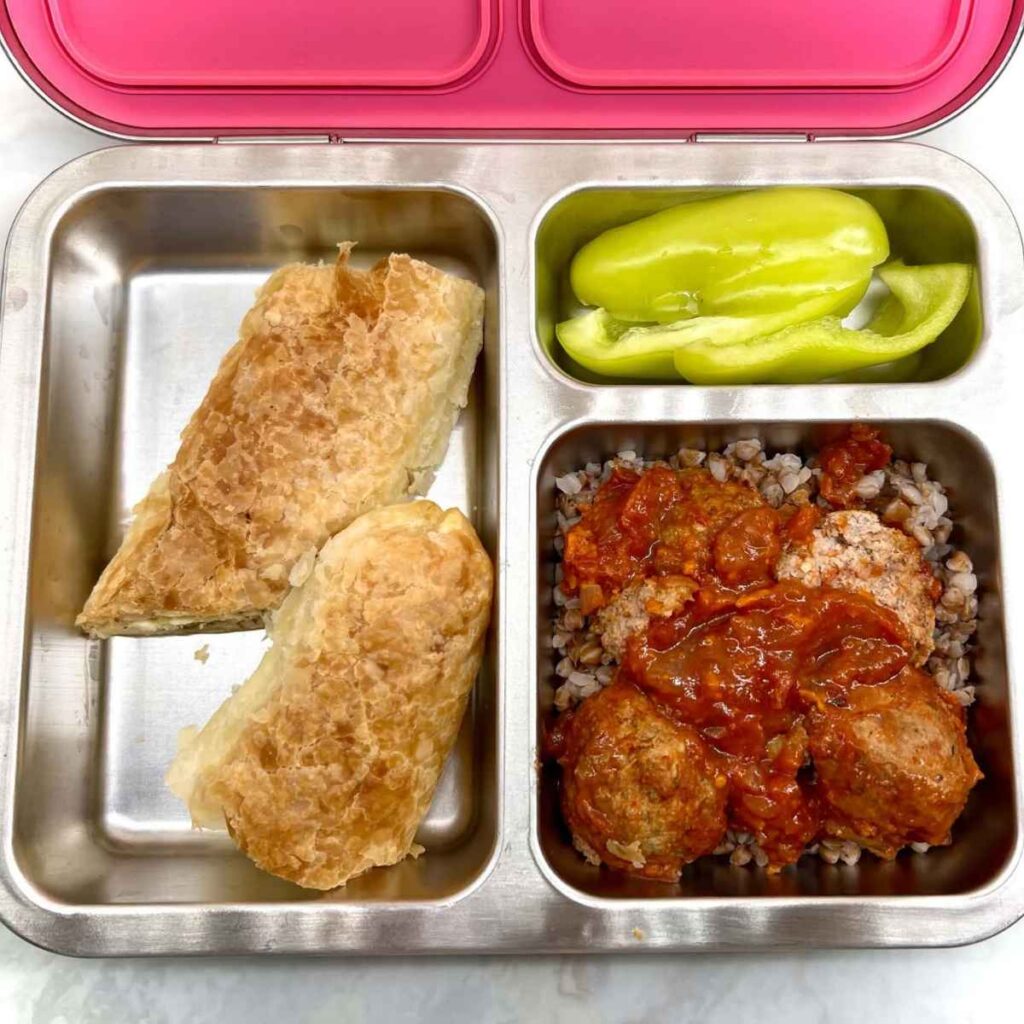
Beef Meatballs, Buckwheat and Cheese Puff Pastry
What’s inside: Beef meatballs baked in tomato sauce, cooked buckwheat groats, homemade cheese puff pastries, and sliced green bell pepper.
How to pack: Refrigerate the cooked meatballs and buckwheat promptly. Pack chilled with cold packs, keeping the pastries separate so they don’t become soggy.
GF/DF swaps: The meatballs and buckwheat can be gluten-free with suitable ingredients. For a gluten-free or dairy-free lunch, replace the cheese pastries with a compatible alternative.
Buckwheat provides a satisfying starchy side, while the meatballs contribute protein and the pepper adds crunch.
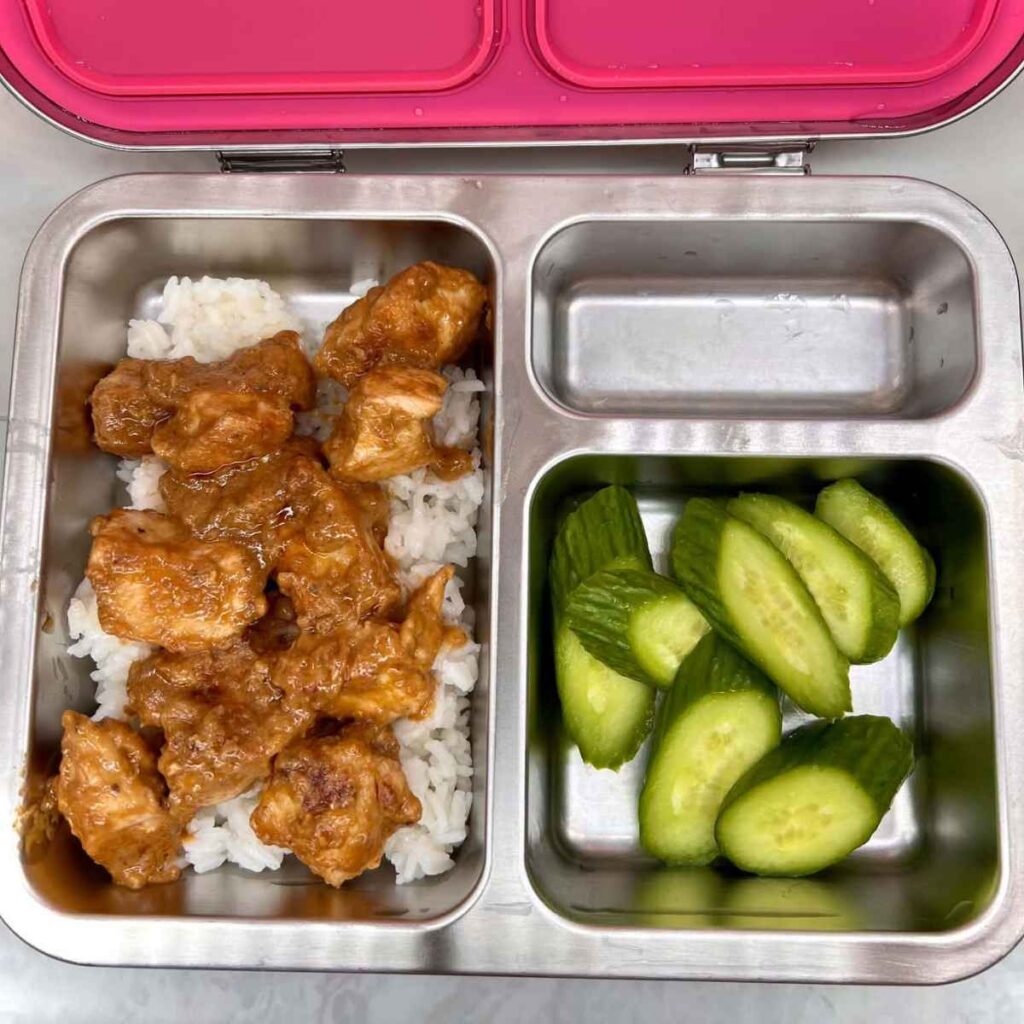
BBQ Chicken and Rice Lunchbox
What’s inside: Tender chicken thigh pieces cooked in BBQ sauce, served over rice with fresh cucumber slices.
How to pack: Cool and refrigerate the chicken and rice right after dinner. Pack chilled with cold packs or reheat and transfer to a suitable insulated food jar. Keep the cucumber cold and separate.
GF/DF swaps: Rice is naturally gluten-free. Check the BBQ sauce ingredients for gluten, dairy, and other allergens.
This is one of the easiest complete school lunches when there’s already chicken and rice left from dinner.
Hot School Lunch Ideas in a Thermos
When the weather gets colder, I sometimes pack a homemade soup in an insulated food jar.
I preheat the jar with boiling water, empty it, then fill it with thoroughly reheated soup and close it immediately. The container needs to keep the food safely hot until lunchtime.
Homemade Chicken Soup for School Lunch
What’s inside: Homemade chicken soup with vegetables, served chunky or blended depending on your child’s preferences.
How to pack: Reheat the soup thoroughly and transfer it to a preheated, leakproof insulated thermos jar. Keep any fruit, bread, or other sides separate.
GF/DF swaps: The linked chicken soup is naturally gluten-free and dairy-free as written.
For a more substantial lunch, pair the soup with bread, rice, or another suitable carbohydrate source.

Butternut Squash Soup with Crackers
What’s inside: Homemade butternut squash soup with tortilla chips, crackers, or another crunchy side.
How to pack: Transfer thoroughly heated soup to a preheated insulated food jar. Pack crackers separately to prevent sogginess.
GF/DF swaps: Use gluten-free crackers and choose the dairy-free version.
Balance it: Add a protein-rich side such as hummus, an egg muffin, or chicken to make this a fuller meal.

Creamy Carrot Soup with Hummus and Rice Cakes
What’s inside: Homemade creamy carrot soup, rice cakes or pita bread, and hummus.
How to pack: Keep the soup safely hot in an insulated food jar, the hummus chilled with cold packs, and the rice cakes or pita separate to preserve their texture.
GF/DF swaps: Use gluten-free rice cakes or bread, the soup is dairy free as written.
The hummus adds some protein and fiber, while the bread or rice cakes provide carbohydrates alongside the vegetable soup.

Make-Ahead Healthy School Lunches: My Weekly Preparation System
The easiest way I’ve found to prepare homemade school lunches consistently is to have a few ready-to-use foods available.
I don’t follow a complicated weekly lunchbox schedule. I just rotate between three practical approaches.
1. Use Dinner Leftovers
When making dinner, I often prepare extra chicken, meatballs, rice, potatoes, soup, or roasted vegetables.
A portion goes into the refrigerator for the following day’s lunch. With a little fruit or some raw vegetables added, lunch is nearly ready.
It’s also a good way to reduce food waste and avoid preparing separate meals for adults and children.
2. Cook Something Fresh When There’s Time
Sometimes I cook pasta, eggs, or pancakes in the morning. A simple dish can become a balanced lunch by adding a suitable protein source and vegetables or fruit.
For example, homemade banana oat pancakes can be paired with an egg muffin, yogurt, and fruit for a breakfast-style school lunch.
3. Keep Homemade Freezer Staples
I usually prepare larger batches of foods that freeze and reheat well.
Some of my favorites include:
- Homemade meatballs and chicken cutlets
- Savory crepe rolls
- Egg muffins and small frittatas
- Vegetable fritters and patties
- Pancakes and waffles
- Homemade muffins and baked snack bars
These help me put together different lunches without preparing everything from scratch each morning.
For an easy batch-cooking option, try my banana sheet pan pancakes. They’re baked all at once, cut into squares, and convenient for freezing.
A packing reminder: Frozen foods containing perishable ingredients should be thawed and packed safely. Avoid reheating food in the morning and then allowing it to sit lukewarm until lunch. Pack it properly chilled or keep it safely hot in an insulated container.
More Homemade Recipes to Mix and Match for School Lunches
Once you understand the food-group balance, it’s easy to mix and match recipes to create different meals throughout the week. Here are some of my favorite make-ahead recipes, organized by their main contribution to the lunchbox.
Protein-Rich Recipes for Kids’ Lunchboxes


Carbohydrate-Rich Mains and Sides


Vegetables and Finger Foods


Healthy Homemade Lunchbox Snacks and Extras

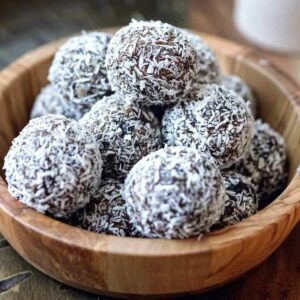


These are additions to a balanced school lunch, not foods that all need to be packed together.
How to Pack Kids’ School Lunches Safely
A homemade lunch is best when the food stays safe to eat throughout the school day. This matters especially for lunches containing cooked chicken, meat, fish, eggs, dairy products, cooked rice, and other perishable foods.
How to Pack Cold School Lunches
- Refrigerate cooked foods promptly and pack them fully chilled.
- I use an insulated lunch bag with at least two frozen cold sources placed around perishable foods.
- The goal is to keep these foods at 40°F (4°C) or colder until lunchtime.
- This applies even when a lunch contains fully cooked ingredients such as chicken meatballs or salmon.
How to Pack Hot School Lunches
For soups, stews, rice dishes, and pasta, use a food jar designed to retain heat.
- Preheat the jar with boiling water for several minutes.
- Empty the water carefully.
- Add reheated, piping-hot food.
- Seal immediately and keep closed until lunch.
The food needs to remain at 140°F (60°C) or hotter until eaten. Test your thermos with a food thermometer after the same amount of time your child normally waits between packing and lunch.
If your container can’t reliably maintain a safe hot temperature, pack the food chilled with cold packs instead.
Can You Pack Food the Night Before?
Yes. I often wash and cut vegetables, cook grains, prepare meatballs, portion leftovers, and organize lunchbox components the evening before.
Keep perishable foods refrigerated until packing.
Add crispy crackers, delicate fruit, or other foods that become soggy closer to lunchtime.

Practical Lunchbox Tips for Busy Parents
➤ Choose containers your child can open. A beautiful lunchbox isn’t very useful if your child needs help opening every compartment.
➤ Keep the main meal familiar. New foods can be introduced gradually, but a busy school lunch period may not be the best time for a complicated unfamiliar dish.
➤ Separate wet and dry ingredients. Small leakproof containers work well for hummus, yogurt, sauces, or fruit.
➤ Use dinner ingredients twice. Cook extra meat or grains and refrigerate lunch portions shortly after.
➤ Include some variety. Rotate different proteins, starchy foods, and vegetables rather than preparing the same lunch every day.
➤ Follow school allergy rules. Check policies about nuts, seeds, and other allergens, and use safe alternatives when needed.
➤ Pack drinking water. A reusable water bottle is a convenient everyday option.
➤ Adjust portions to your child. Pay attention to appetite and how much time your child has to eat, rather than assuming every lunchbox compartment must be full.
How I Pack My Kid’s Lunch Box
I switch between using an insulated thermos food jar for hot meals and a leak-proof stainless steel Bentgo box for bento-style cold lunches.
I keep the cold items as snacks in separate small stainless steel containers with an ice pack if necessary, and both fit nicely in the same Bentgo lunch bag.

I don’t pack any drinks other than water and I use a thermos water bottle with straw. It fits nicely in the side pocket of the lunch bag.
Frequently Asked Questions About Healthy School Lunches
What Should Be in a Healthy Lunchbox for Kids?
A balanced kids’ lunchbox can include a protein-rich food, a satisfying carbohydrate source, vegetables or fruit, and some healthy fats. For example, chicken meatballs with pasta and cucumbers, salmon with potatoes and asparagus, or egg muffins with pancakes and fruit. Portions should be adjusted to the child’s appetite, age, and nutritional needs.
What Are Some Easy Lunchbox Ideas for Kindergarten?
Good kindergarten lunch ideas include chicken or beef meatballs with pasta, homemade mini cutlets, egg muffins with fruit, tortilla roll-ups, and leftover chicken with rice or potatoes. I prefer foods children can eat independently without complicated utensils or difficult packaging.
What Can I Pack Instead of Sandwiches?
Try pasta dishes, homemade meatballs, chicken cutlets, rice bowls, vegetable fritters, savory crepe rolls, egg muffins, or soup in a thermos. These foods are especially convenient when prepared as part of a family meal or batch-cooked ahead.
How Do You Make a Healthy Lunchbox Without Packaged Snacks?
Start with a homemade main meal, such as chicken and rice, meatballs and potatoes, or an egg-based dish. Add vegetables, fruit, and any other appropriate sides. Packaged foods can still have a place in a healthy diet. My preference is simply to rely on homemade meals as the foundation.
What Are Some Gluten-Free Lunchbox Ideas for Kids?
Try rice with chicken and vegetables, buckwheat with meatballs, gluten-free pasta with tomato sauce, homemade gluten-free crepes, or vegetable fritters made with suitable flour. For children with celiac disease, use certified gluten-free ingredients and prevent cross-contact during preparation.
What Are Some Dairy-Free School Lunch Ideas?
Many meals can be made dairy-free using olive oil instead of butter, dairy-free crepes or breads, and suitable milk-free yogurt alternatives. Chicken with rice, fish with potatoes, vegetable soups, and many homemade meatballs can be prepared without dairy ingredients.
Are Dinner Leftovers Safe for School Lunches?
Yes, when handled and stored properly. Refrigerate leftovers shortly after cooking, then pack them thoroughly chilled with sufficient cold packs or reheat them and place them in an insulated food jar that maintains safe temperatures. Avoid leaving meat, rice, poultry, or fish at room temperature for several hours.
What If My Child Doesn’t Finish Their Lunch?
There are many possible reasons: a short lunch period, distractions, unfamiliar foods, or simply not being very hungry. Start with manageable portions and a few familiar foods, then adjust based on your child’s eating habits. One partially eaten lunch doesn’t necessarily mean the meal was poorly planned.
Making Healthy School Lunches Easier
After years of packing school lunches, I’ve found that the easiest approach is to work with what we’re already cooking at home. A little extra chicken and rice from dinner, a batch of homemade meatballs in the freezer, or some egg muffins and fresh fruit can make the next morning much easier.
I hope these real-life lunchbox ideas help you see how simple ingredients can come together into a nourishing, satisfying meal. Use the combinations as inspiration, adjust them to your child’s preferences, and keep what works for your family.
I’d love to hear from you! What’s one homemade meal your child actually enjoys taking to school? Share your favorite lunchbox combination in the comments. Your ideas might inspire another parent planning tomorrow’s lunch!
More Easy Make-Ahead Recipes for School Lunches