Banana Pancakes for Babies (6 Months+) Egg-Free Option
These banana pancakes for babies are soft, fluffy, and naturally sweet, with no added sugar. Made with mashed banana, egg, and flour, they’re easy to prepare for babies starting solids around 6 months, baby-led weaning (BLW), and toddlers. You can also make them without eggs, using my tested flaxseed version, or choose gluten-free, dairy-free, and grain-free flour alternatives.

When Can Babies Have Pancakes?
Babies can generally start eating pancakes around 6 months of age, once they show signs of being ready for solid foods. The pancakes should be fully cooked, soft enough to break apart easily, and served in a shape your baby can safely manage.
You don’t need to wait for teeth, but your baby should be able to sit upright with support, control their head, and bring food toward their mouth.
These homemade banana pancakes work well for baby-led weaning because you can cut them into strips for beginners or smaller pieces as your baby develops better finger coordination.
A few things to consider:
- Serve pancakes without honey, added sugar, or salty toppings.
- Choose a soft, manageable texture rather than dry, tough, or gummy pancakes.
- Introduce ingredients such as egg, wheat, and dairy appropriately, especially if your baby has a history of food allergies.
- Always supervise your baby while eating.
For more information about introducing finger foods, see my baby-led weaning foods by age guide.
Why You’ll Love These Baby Banana Pancakes
- Naturally sweet: Ripe bananas provide enough sweetness without adding sugar.
- Soft and fluffy: The regular egg version has a light, tender texture that’s easy to tear into pieces.
- Small batch: One banana makes approximately 8 pancakes, so there’s no need to prepare a large amount.
- Allergy-friendly alternatives: The recipe includes a separate egg-free version and different flour options.
- Easy to freeze: Keep a few cooked pancakes ready for quick breakfasts or snacks.
- Suitable for the whole family: Toddlers and older kids can enjoy the same pancakes with their favorite toppings.
If you prefer pancakes made specifically with ground rolled oats, try my soft banana oat pancakes for babies and toddlers. That recipe uses a blender and has a slightly different texture.

Ingredients for Baby Banana Pancakes
You only need a few basic ingredients for the regular version. The full measurements for both versions are in the recipe card below.
- Ripe banana: Use a large, ripe banana with brown spots. It’s naturally sweeter, easier to mash, and adds moisture.
- Egg: Helps bind the ingredients and creates a lighter pancake. For babies who cannot have eggs, see the separate flaxseed recipe below.
- Flour: I used einkorn flour, but all-purpose flour, whole wheat flour, or other suitable flour alternatives can work. Different flours absorb moisture differently, so the texture may vary.
- Baking soda and lemon juice: Work together to help the pancakes rise. You can use baking powder instead.
- Cinnamon (optional): Adds a little flavor without additional sweeteners.
- Oil for cooking: A small amount of avocado oil or coconut oil can be used to lightly grease the skillet.

How to Make Banana Pancakes for Baby
This is the regular recipe made with egg. It’s simple to mix by hand and doesn’t require a blender.
1. Mash the banana
Peel one large ripe banana and mash it thoroughly with a fork until mostly smooth. A few small lumps are fine.
2. Mix the batter
Beat the egg lightly, then combine it with the mashed banana and flour. Stir until you have a thick but spoonable batter. Avoid over-mixing, especially if using wheat-based flour.
3. Add the leavening
Just before cooking, add the baking soda and lemon juice. Stir gently to incorporate the bubbles formed by the reaction. Alternatively, use baking powder as indicated in the recipe card.
4. Cook over medium-low heat
Preheat a nonstick or ceramic skillet over medium-low heat. Lightly grease it if necessary. Spoon small portions of batter onto the skillet. Use approximately ½ tablespoon for mini pancakes or 1 tablespoon for pancakes around 2½ inches wide.

Allow the underside to become lightly golden and the edges to begin setting before flipping. Cook the second side until golden and the middle is completely cooked. Banana pancakes brown quickly, so avoid high heat.
5. Cool and serve
Transfer the pancakes to a plate or cooling rack and let them cool to a comfortable temperature. Check that the centers are cooked through before cutting into age-appropriate portions.
How to Serve Pancakes to Babies by Age
The size and shape you serve matter just as much as the recipe itself. Use your baby’s development and eating experience as your guide rather than relying on age alone.
Pancakes for 6–8-Month-Old Babies
For a baby beginning baby-led weaning, cut a soft pancake into long strips about the width of two adult fingers placed together. The strips should be large enough for your baby to grasp with their whole hand while part of the pancake remains outside the fist. Start with a small amount and allow your baby to explore the food at their own pace.
Pancakes for 9–11-Month-Old Babies
As babies develop a pincer grasp, they may be able to pick up small, soft, bite-sized pancake pieces. You can also continue offering strips if your baby prefers holding food and taking bites independently.

Pancakes for 12-Month-Olds and Toddlers
Toddlers can usually enjoy mini pancakes whole or cut into manageable pieces, depending on their chewing skills. Serve them with fruit, yogurt, or another breakfast food rather than relying on pancakes alone.
For toddlers serve the pancakes whole just as you would serve them to adults.

How to Make Banana Pancakes for Baby Without Eggs
If your baby has an egg allergy or you’re looking for a vegan alternative, you can make these egg-free banana pancakes with ground flaxseed instead of egg.
I’ve tested this variation separately because simply removing the egg from the original recipe changes the texture considerably.
For the egg-free version, use:
- 1 large ripe banana, mashed
- 1 tablespoon finely ground flaxseed
- ¼ cup + 2 tablespoons milk, buttermilk, or suitable non-dairy milk
- ½ cup flour
- 1 teaspoon baking powder
Egg-Free Instructions:
- Combine the ground flaxseed with the warm milk or non-dairy alternative. Let it stand until it begins to thicken while you prepare the remaining ingredients.
- Mash the banana thoroughly with a fork.
- Mix the banana with the flour and baking powder.
- Add the flaxseed mixture and stir until combined.
- Heat a lightly greased skillet over medium-low heat.
- Spoon approximately 1 tablespoon of batter per pancake into the pan.
- Cook until the edges set, then carefully flip and cook until both sides are golden and the centers are fully cooked.
- Texture difference: The egg-free pancakes are softer and somewhat denser, with a slightly gummier interior than the regular version. I find that using baking powder works better than baking soda for this variation.
- Making smaller pancakes also helps them cook more evenly and makes flipping easier.

For more recipes without eggs, explore my egg-free baby, toddler and kids’ recipes.
Gluten-Free, Dairy-Free and Grain-Free Options
One of the useful things about this recipe is that you can prepare it with different flour types depending on your family’s needs.
Gluten-Free Banana Pancakes for Babies
Replace the wheat flour with certified gluten-free oat flour or a suitable gluten-free all-purpose flour blend. If using rolled oats, grind them finely first. Remember that gluten-free flour blends vary in absorption and texture, so the batter may need small adjustments.
Important: Einkorn flour contains gluten and is not suitable for a gluten-free diet.
If you’d rather follow a recipe specifically developed around oats, see my banana oatmeal pancakes for babies.
Dairy-Free Banana Pancakes
The regular egg-based version doesn’t require milk, so it is naturally dairy-free when cooked without butter. For the egg-free version, substitute the milk or buttermilk with a suitable unsweetened plant-based milk. Water with a little oil is another option I describe in the original recipe.
Check ingredient labels if you’re avoiding dairy because of an allergy.
Grain-Free Banana Pancakes
For a grain-free alternative, use green banana flour instead of wheat flour.
In my original recipe tests, approximately 3–4 tablespoons of banana flour worked in place of the regular flour amount. Green banana flour absorbs liquid differently and creates a slightly darker, delicate pancake.
These flour substitutions can affect the texture differently in the egg-free batter. I recommend starting with the appropriate tested version rather than combining several substitutions at once.

Tips for Soft, Fluffy Banana Pancakes
➤ Use a ripe banana. A banana with plenty of brown spots is sweeter and easier to mash, giving the pancakes better moisture and flavor.
➤ Keep the batter thick but spoonable. If it spreads excessively in the pan, the pancake may turn out thin and difficult to flip. If it seems too thick because of the flour, adjust with a little liquid.
➤ Cook low and slow. Medium-low heat allows the center to cook before the outside becomes too dark.
➤ Make smaller pancakes. Mini pancakes are easier to flip, particularly with the egg-free batter.
➤ Don’t rush the flip. Wait until the edges look set and the underside is golden enough to hold together.
➤ Check the center. The finished pancake should be fully cooked and soft, without raw or sticky batter inside.

What to Serve With Baby Banana Pancakes
Because these pancakes are naturally sweet, they don’t need syrup. I like pairing them with other simple foods for a more varied breakfast.
- Plain unsweetened yogurt: Adds creaminess and protein. Choose dairy-free yogurt if needed.
- Mashed berries or fruit puree: Add a little moisture and a different flavor.
- Smooth nut or seed butter: Thin it with yogurt or water, and use only if the allergen has been introduced appropriately. Avoid thick, sticky spoonfuls.
- Soft, age-appropriate fruit: Ripe banana, cooked apple, or appropriately prepared berries.
Pancakes provide carbohydrates and, in the egg version, some protein. For babies especially, remember to offer iron-rich foods throughout the day, such as meat, lentils, beans, or iron-fortified baby cereals.
If you’re looking for other ways to serve bananas during the first year, see my banana for babies and baby-led weaning guide.
Make Ahead, Storage and Freezing
These homemade banana pancakes freeze well, making them convenient for preparing small portions ahead of time.
- Refrigerator: Cool the pancakes completely and store in an airtight container in the refrigerator for up to 2–3 days.
- Freezer: Arrange the pancakes in a single layer until frozen, then transfer to a freezer-safe container. Separate the layers with parchment paper to prevent sticking. Freeze for up to 2–3 months for best quality.
- Reheating: Reheat in a skillet, toaster, or microwave until heated through. Let cool before serving and check that the center is still soft and not overly dry.
For babies, prepare or reheat only the portion you need and discard food left over from their plate.
For older kids, these mini pancakes can also make an easy lunchbox addition. See my healthy lunchbox ideas for kids for more combinations.
Frequently Asked Questions
Can a 6-month-old have banana pancakes?
Yes, once your baby is developmentally ready for solid foods. Offer fully cooked pancakes that are soft, free of honey, and cut into an easy-to-grasp shape. Make sure your baby can manage the texture and that any common allergens in the recipe have been introduced appropriately.
Can a 7- or 8-month-old eat pancakes?
Yes. Babies at 7 or 8 months can continue enjoying soft pancake strips, provided they’re managing finger foods well. There’s no need to change to tiny pieces before your baby has the coordination to pick them up and eat them safely.
Can I make baby banana pancakes without eggs?
Yes. Use the separate egg-free recipe with finely ground flaxseed, milk or non-dairy milk, mashed banana, flour, and baking powder. It has different proportions from the regular recipe and produces a somewhat denser texture.
Why are my banana pancakes gummy inside?
Too much banana, excess liquid, thick pancakes, or high cooking heat can all leave the center too wet. Try smaller pancakes, keep the heat medium-low, and wait until both sides are cooked and the center is set.
Can babies have pancakes made with milk?
Yes, milk can be used as an ingredient in cooked foods once your baby is ready for solids and can tolerate dairy. However, cow’s milk should not replace breast milk or infant formula as the main drink before 12 months.
Can babies have maple syrup on pancakes?
It’s best to avoid added sugars during infancy. These pancakes already contain ripe banana, so they’re sweet enough without syrup. Never serve honey to a baby under 12 months.
Can I make these pancakes without flour?
The standard recipe includes flour for structure. You can make different styles of flourless banana-and-egg pancakes, but those use different ingredient ratios and often have a softer, more egg-like consistency. I recommend following this recipe as written for its intended texture.
The age ranges are guides, not guarantees that a particular child can safely manage a certain texture.
Have you tried these baby banana pancakes? I’d love to know whether you made the regular or egg-free version and how your little one enjoyed them. Leave a ★★★★★ star rating and a comment below to help other parents find this recipe!

Banana Pancakes for Babies (6 Months+) Egg-Free Option
INGREDIENTS
Regular Banana Pancakes With Egg
- 1 large banana (mashed with a fork)
- 1 large egg, beaten
- ⅓ cup flour (see notes)
- ½ tsp baking soda + ½ tsp lemon juice (or ¾ tsp baking powder)
Banana Pancakes Without Egg
- 1 tbsp ground flax seeds
- ¼ cup+ 2 tbsp milk / buttermilk (or non dairy milk)
- 1 large banana (mashed)
- ½ cup flour (see notes)
- 1 tsp baking powder
- A little oil for the skillet, if needed
INSTRUCTIONS
Regular Banana Pancakes With Egg
- Mash the banana. Peel the ripe banana and mash thoroughly with a fork until mostly smooth.
- Mix the batter. Beat the egg lightly and combine with the banana and flour. Stir just until incorporated.
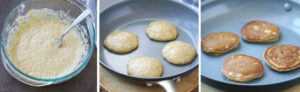
- Add the leavening. Just before cooking, add the baking soda and lemon juice and gently mix. Alternatively, use baking powder.
- Heat the skillet. Preheat a nonstick skillet over medium-low heat. Lightly grease if necessary.
- Cook the pancakes. Drop about ½–1 tablespoon of batter per pancake onto the skillet. Cook until the edges set and the underside turns lightly golden. Flip and cook the other side until the centers are fully cooked.
- Cool and serve. Transfer to a plate or cooling rack. Let cool to a comfortable temperature and cut into age-appropriate portions.
Egg-Free Banana Pancakes
- Finely mill the flax seeds and add the warm milk (or water). Mix and let stand until it starts to thicken.
- Mix mashed banana with the flour and baking powder. Add the flax seed mixture and the and mix thoroughly.
- Heat the skillet. Drop about 1 tablespoon of batter, the smaller the pancakes the easier to flip. Cook until the underside is golden and the edges are set. Flip carefully and cook until fully done in the center.Cool before serving. These pancakes will be slightly denser and more moist than the regular version.
See gluten free, grain free and dairy free suggestions below.
NOTES
More Pancake and Breakfast Recipes for Babies and Toddlers


Disclaimer: The information, including but not limited to, text, graphics, images and other material contained on this website are for informational purposes only and not intended for medical advice. Please refer to my full disclaimer for more info.

©ThrivingNest. Content and photographs are copyright protected and need prior permission to use. Copying and/or pasting full recipes to other websites and any social media is strictly prohibited. Sharing and using the link of this recipe is both encouraged and appreciated!


We really loved these banana pancakes they absolutely delicious, my older kids loved them too! Thank you!
My pleasure, I’m glad your family enjoyed them!