Potatoes for Baby (BLW): How to Cook & Serve by Age
Potatoes for babies are easy to prepare as soft finger foods, mashed potatoes, or a smooth puree. Starting around 6 months, you can offer steamed potato wedges for baby-led weaning (BLW), creamy mashed potatoes for spoon-feeding, or soft roasted pieces as your baby’s eating skills develop.
Below, I’ll show you four ways to cook potatoes for babies, how to cut them by age, the cooking times that work for different textures, and simple combinations to turn them into a more complete meal.
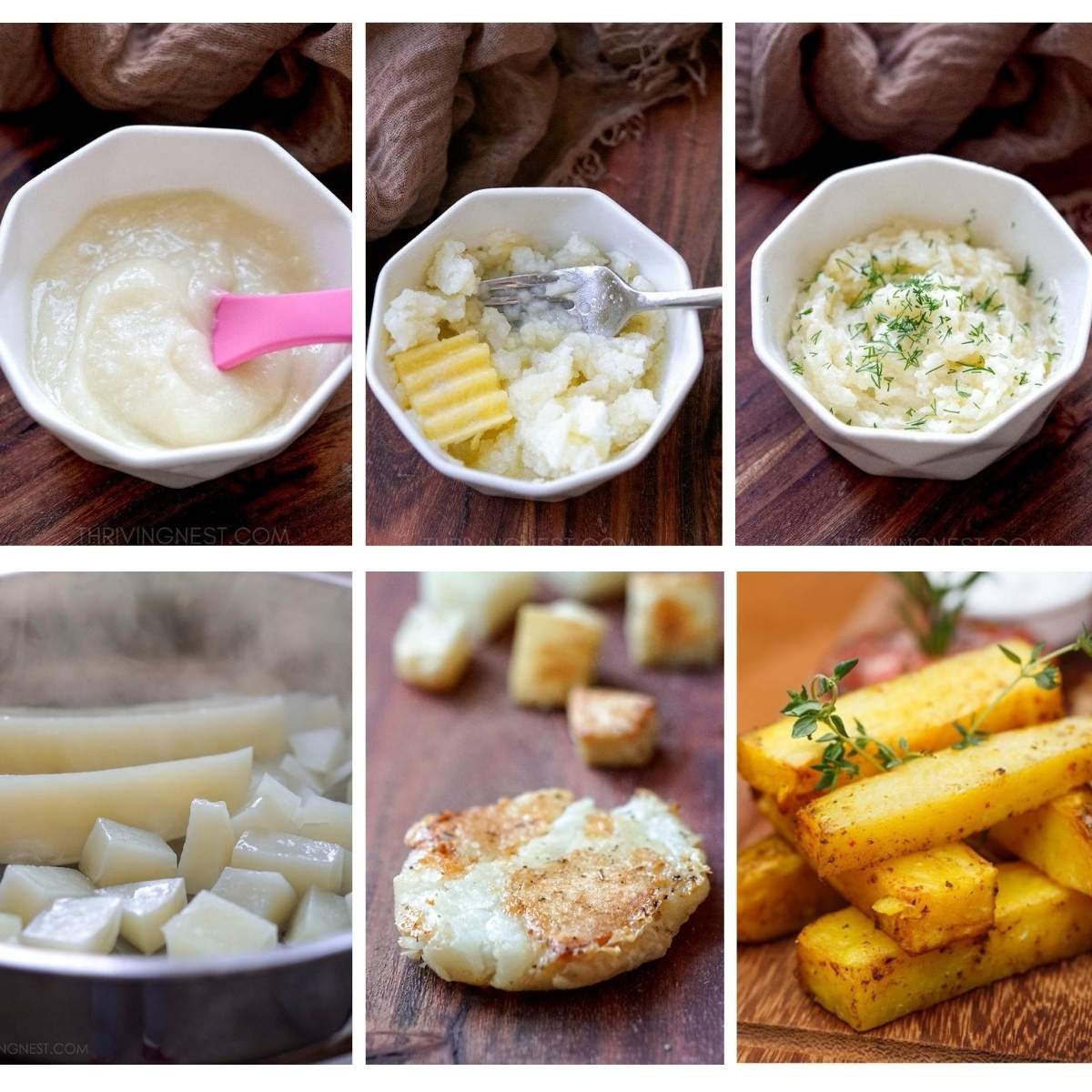
Can Babies Eat Potatoes at 6 Months?
Yes. Babies can start eating potatoes when they’re developmentally ready for solid foods, generally around 6 months.
Potatoes provide carbohydrates for energy, along with potassium and some vitamin C. They’re mild in flavor, easy to combine with other foods, and can be prepared in different textures.
For beginners, the most important detail is how the potato is cooked and served. It should be soft enough to mash easily between your fingers, whether you’re offering a large wedge or mashed potato on a preloaded spoon.
White, yellow, red, and purple potatoes can all be used. For babies, I prefer varieties that become creamy and tender after cooking.
Potatoes are not especially rich in iron, so I like pairing them with foods such as meat, lentils, or beans to make a more balanced meal.
How to Cut Potatoes for Baby-Led Weaning by Age
The best potato shape depends on your baby’s ability to grasp food, bite, and manage different textures. Age ranges are only a guide, so follow your baby’s developmental skills.
If you prefer you can cook first (steam or roast), and then cut (or mash).

For a fun crinkle-cut shape use a crinkle knife. It’s quick to cut and easy for babies to hold with their little hands because it doesn’t slide off.
6–8 Months: Large, Soft Potato Wedges
For babies beginning BLW, offer thick, finger-length potato wedges or strips, approximately 2–3 inches long and 1 inch thick.
The pieces should be large enough for your baby to hold in a fist with part of the potato sticking out. Cook until completely soft, without a hard or crispy exterior.
You can also offer:
- Smooth potato puree.
- Soft mashed potatoes on a preloaded spoon.
- A mound of thicker mashed potato for your baby to scoop with their hands.
I prefer peeling potatoes for beginners, especially if the skin is tough.
9–11 Months: Small, Soft Pieces
Once your baby develops a pincer grasp, usually around 9 months, you can introduce smaller, bite-sized pieces of cooked potato.
Try:
- Soft potato cubes or irregular pieces.
- Shorter steamed or roasted strips.
- Mashed potato with a slightly thicker texture.
The pieces should still mash easily between your fingers. You can continue offering larger wedges if your baby enjoys practicing biting and chewing.
12 Months+: Potato Finger Foods for Toddlers
Toddlers can enjoy soft roasted potatoes, mashed potatoes, wedges, and bite-sized pieces as part of family meals.
This is also a good time to encourage utensil practice by offering potato pieces with a toddler fork or spoon.
Safety tip: Never offer raw, hard, or undercooked potato pieces. Avoid small, firm, round baby potatoes served whole. Always supervise your child while eating, and serve food in a seated, upright position.
For more age-specific ideas, see my baby-led weaning foods by age guide.
How to Cook Potatoes for Baby: 4 Easy Methods
You can steam, roast, boil, or mash potatoes depending on the texture you want.
Here’s a quick comparison before the step-by-step instructions.
| Method | Approximate Time | Best For |
|---|---|---|
| Steaming | 15–20 minutes | Soft BLW wedges and finger foods |
| Roasting | 30–40 minutes | Tender wedges and family meals |
| Boiling | 10–15 minutes for smaller pieces | Mashed potatoes and purees |
| Mashing | 2–3 minutes after cooking | Spoon-feeding and meal combinations |
Cooking times vary with potato size, variety, and thickness. Always check tenderness rather than relying on the clock alone.
1. Steamed Potatoes for Baby
Steaming is one of my favorite ways to prepare potatoes for baby-led weaning because it produces soft pieces without developing a crust.
Instructions:
- Wash and peel the potatoes, then cut into thick wedges or strips.
- Add about 1 inch of water to a saucepan fitted with a steamer basket and bring it to a boil.
- Place the potatoes in the basket, cover, and steam over medium-low heat for approximately 15–20 minutes.
- Check that a fork passes through easily and the potato mashes when gently pressed between your fingers.
- Cool to a comfortable serving temperature.
You can also steam larger potato pieces or halves, then mash or cut them after cooking. Larger pieces will take longer.

My tip: If the wedges become too soft to hold their shape, serve them mashed instead. For early BLW, the goal is a potato that’s easy to grip but still breaks down readily in the mouth.
2. Roasted Potatoes for Baby
Roasting is convenient when you’re already preparing potatoes for the rest of the family.
For younger babies, I recommend a softer roasted texture rather than crispy potato wedges or fries.
Instructions:
- Preheat the oven to 375–385°F (190–196°C) for softer roasted potatoes.
- Peel the potatoes and cut into thick wedges or strips.
- Toss with a little olive oil or avocado oil. Add a small amount of rosemary, sage, garlic powder, or onion powder if desired.
- Arrange on a parchment-lined baking sheet in a single layer.
- Roast for approximately 30–40 minutes, turning as needed, until completely tender.
For older children and adults, you can roast at 400–415°F for a more golden exterior. However, make sure any pieces served to babies remain soft and don’t have hard, crunchy edges.

Alternative: Roast a potato half until very soft, remove the flesh from the skin, and mash it with a fork. This works well when you want to prepare baby food alongside your own dinner.

3. Boiled Potatoes for Baby
Boiling is an easy option for mashed potatoes, purees, and soups.
- Peel and cut the potatoes into evenly sized chunks.
- Place in a saucepan and cover with water or unsalted broth.
- Bring to a boil, then reduce the heat and simmer for approximately 10–15 minutes, or until completely soft.
- Drain, reserving some cooking liquid if you’re making mashed potatoes.
- Serve in an age-appropriate texture.
For extra flavor, you can add an onion wedge, garlic clove, or bay leaf to the cooking water. Remove these before serving or mashing.
Boiling is especially useful when you want to combine potatoes with other vegetables or make a creamy soup.
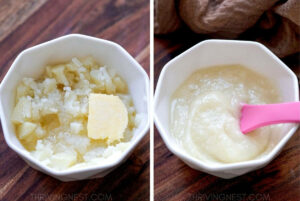
4. Mashed Potatoes for Baby (6 Months+)
Mashed potatoes are one of the simplest ways to introduce potatoes to babies. They can be served smooth, lightly textured, or thick enough for self-feeding.
How to make creamy baby mashed potatoes:
- Steam or boil peeled potatoes until very soft.
- Transfer the warm potatoes to a bowl.
- Mash thoroughly with a fork, potato masher, or ricer.
- Add a little warm water, unsalted broth, breast milk, or prepared infant formula to reach the desired consistency.
- Mix in a small amount of butter or olive oil if desired.

For early spoon-feeding, make the potatoes smooth and moist. For baby-led weaning, leave them thick enough to stay on a preloaded spoon or be scooped with the hands.

How to avoid gummy mashed potatoes: Don’t blend cooked potatoes for too long in a food processor. Too much mixing releases starch and can create a sticky, gluey texture. A fork, masher, or potato ricer usually works better. For a very smooth texture, press the mashed potato through a fine sieve.
If using breast milk or prepared formula, add it to an individual portion just before serving when possible.
Potato Baby Food Combinations: 5 Easy Ideas
Plain potatoes are convenient, but combining them with other ingredients makes meals more varied in flavor, texture, and nutrients.
These simple combinations use already cooked, soft ingredients. Adjust the proportions and consistency to suit your baby.
1. Potato + Chicken
Mix 2 tablespoons of creamy mashed potato with 1–2 tablespoons of finely shredded or minced, fully cooked chicken. Add a little unsalted broth to make the mixture moist and easy to eat. This is a convenient way to pair potatoes with protein and iron-containing foods.
For more preparation ideas, see my chicken for babies guide.
2. Potato + Broccoli
Combine 2 tablespoons of mashed potato with 2 tablespoons of very soft steamed broccoli, finely mashed or chopped. Add a little olive oil to improve the texture. This works particularly well when the broccoli is soft enough to blend naturally into the potato.
3. Potato + Carrot
Mash equal parts soft cooked potato and carrot. The carrot adds natural sweetness and a little color. For a smoother puree, add a spoonful of cooking liquid and mash until well combined.
4. Potato + Peas
Combine 2 tablespoons of mashed potato with 1–2 tablespoons of fully cooked, well-mashed peas. Mash the peas thoroughly so no firm, round peas remain for younger babies. The potato helps hold the mixture together, making it easier to scoop.
5. Potato + Avocado
Mix 2 tablespoons of warm mashed potato with 1 tablespoon of ripe mashed avocado. This creates a creamy mixture without dairy and adds unsaturated fat. Serve freshly prepared, since avocado can darken after mixing.
You can also combine potatoes with cauliflower, butternut squash, zucchini, asparagus, or finely mashed lentils.
Meal idea: For a simple baby lunch, serve soft potato wedges alongside a suitable iron-rich food and another cooked vegetable. For spoon-feeding, mash the same ingredients together into a moist mixture. There’s no need to prepare an entirely separate meal when the family’s ingredients can be adapted safely.
Best Potatoes to Use for Baby Food
Most potato varieties work, but their textures differ.
- Yukon Gold: Naturally creamy and easy to mash. One of my favorites for baby mashed potatoes.
- Russet: Fluffy when cooked, making it a good choice for mashed potatoes and purees.
- Red or white potatoes: Hold their shape well and work nicely for steamed or roasted wedges.
- Purple potatoes: Another option for introducing different colors and flavors.
For beginners, I usually peel the potatoes to create a softer, more consistent texture. Older babies and toddlers may manage tender potato skins, depending on how they’re cooked.
Choose fresh potatoes and avoid using green portions or sprouts.

Tips for the Best Texture
➤ Check softness with your fingers. The cooked potato should mash easily between your thumb and index finger. A potato that feels firm in the center needs more cooking.
➤ Keep roasted wedges soft. Firm, crispy edges may be difficult for early eaters to manage. Use a moderate oven temperature and remove hard sections before serving.
➤ Add liquid gradually when mashing. Start with a little and add more as needed. Too much liquid can make the potatoes runny.
➤ Don’t over-process. Fast blending can make mashed potatoes sticky. Mash by hand for a lighter texture.
➤ Use flavor without relying on salt. Garlic, onion, rosemary, sage, and other mild herbs can introduce different flavors. Avoid adding salt to food prepared for babies.
Storage, Freezing and Reheating
Potatoes are easy to prepare in batches, especially if you plan to use them in different meals.
- Refrigerator: Store homemade potato baby food in an airtight container in the refrigerator for up to 48 hours.
- Freezing: Freeze mashed potato or puree in small portions for up to 3 months for best quality. Roasted and steamed potatoes can also be frozen, but their texture may become softer or grainier after thawing.
- Thawing: Thaw overnight in the refrigerator rather than leaving baby food on the counter.
- Reheating: Heat thoroughly, stir to distribute the heat, and allow to cool to a safe serving temperature. Add a little liquid if mashed potatoes have thickened.
- If the puree contains breast milk or prepared formula, follow the applicable handling and storage rules for those ingredients. For simplicity, I prefer freezing plain mashed potato and adding milk or formula when serving.
Discard food left on your baby’s eating plate.
Frequently Asked Questions
Can a 6-month-old baby eat mashed potatoes?
Yes. Mashed potatoes can be introduced around 6 months when your baby is ready for solids. Serve them soft and moist, with a smooth or gently mashed texture depending on your baby’s eating skills. Avoid adding salt.
Can babies eat potato skin?
They can once they’re able to manage the texture, but I prefer removing the skin for beginners. Potato skins can sometimes remain chewy even when the inside is soft. If leaving the skin on, make sure it’s tender and your baby can manage it.
Are potatoes constipating for babies?
Potatoes don’t automatically cause constipation. A baby’s bowel habits can change when solid foods are introduced, and many factors influence stool consistency. Offer a variety of foods rather than relying heavily on one ingredient. If constipation is persistent or painful, speak with your child’s pediatrician.
Can babies eat roasted potatoes or homemade fries?
Yes, as long as they’re fully cooked, soft, and prepared in an appropriate shape. For young babies, avoid hard, crispy edges. Homemade soft potato wedges are a better choice than crunchy fries.
Can babies eat potatoes every day?
Potatoes can be part of a baby’s diet, but variety is important. Rotate them with other vegetables, grains, proteins, and iron-rich foods to provide a broader range of nutrients and textures.
Why is my baby potato puree sticky or gluey?
Overmixing is usually the reason. Blending cooked potatoes too vigorously releases starch and produces a gluey texture. For a smoother puree, mash thoroughly with a fork or ricer, then add warm liquid gradually.
Have you tried serving potatoes to your baby? I’d love to know which preparation worked best – steamed wedges, roasted potatoes, or mashed. Leave a star rating and comment below to help other parents!

Potatoes for Baby (BLW): Steamed, Roasted, Boiled And Mashed
INGREDIENTS
- 2 medium potatoes (washed and peeled (optional to peel for older babies))
For Steaming or Boiling
- Water (enough for the chosen cooking method (approximately 1–2 cups for steaming, depending on the pan))
Optional for Roasted Potatoes
- A little olive oil or avocado oil
- ⅓ teaspoon dried rosemary or sage
- ⅓ teaspoon garlic powder or onion powder
Optional for Mashed Potatoes
- 1 teaspoon unsalted butter or olive oil
- Up to ½ cup warm water or unsalted broth (as needed for consistency)
- Breast milk or prepared infant formula (added to the portion when serving, if desired)
INSTRUCTIONS
1. Prepare the potatoes
- Wash and peel the potatoes, if desired. Cut into thick, finger-length wedges for early BLW, or smaller pieces for babies who can manage them. All potatoes must be cooked until completely soft.
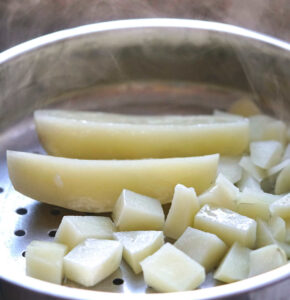
2. Steaming Method (15–20 min)
- Add about 1 inch of water to a saucepan fitted with a steamer basket. Bring to a boil, add the potato wedges, and cover. Steam for approximately 15–20 minutes, until the potatoes mash easily between your fingers.
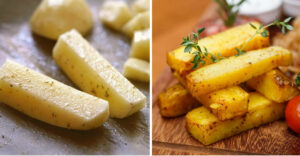
3. Roasting Method (30–40 min)
- Preheat the oven to 375–385°F (190–196°C). Toss the potato wedges with a little oil and optional herbs. Arrange on a parchment-lined baking sheet and roast for 30–40 minutes, turning as needed, until tender. Avoid hard or crispy edges for younger babies.
4. Boiling Method (10–15 min)
- Place peeled potato chunks in a saucepan and cover with water or unsalted broth. Bring to a boil, reduce the heat, and simmer for approximately 10–15 minutes or until completely soft. Drain, reserving some cooking liquid if making mashed potatoes.
5. Mashed Potatoes or Puree
- Mash the fully cooked potatoes with a fork, masher, or ricer. Add warm water or homemade chicken stock gradually until you reach the desired consistency.
6. Cool and Serve
- Allow the potatoes to cool to a comfortable temperature and serve in a shape and texture appropriate for your baby's developmental skills.
NOTES
- For a fun crinkle-cut shape use a crinkle knife. It’s quick to cut and easy for babies to hold with their little hands because it doesn’t slide off.
- You can also cut the potatoes into other shapes (cubes, strips, small sized half moon shapes or spiralized).
NUTRITION
More Baby-Led Weaning Recipes to Try


Disclaimer: The information, including but not limited to, text, graphics, images and other material contained on this website are for informational purposes only and not intended for medical advice. Please refer to my full disclaimer for more info.
©ThrivingNest. Content and photographs are copyright protected and need prior permission to use. Copying and/or pasting full recipes to other websites and any social media is strictly prohibited. Sharing and using the link of this recipe is both encouraged and appreciated!


Smashing potatoes for babies is such a great idea! Thank you.
Thanks… and I hope your baby enjoys the new options!